Planning· 12 min read· Explore Africa editorial · Published June 2026 · Updated 30 Oct 2026
When to Go on Safari in Africa: A Season-by-Season Guide for Australian Travellers
Picking the right time for an African safari is the single most important planning decision you'll make — get it right and the wildlife comes to you; get it wrong and you're staring at empty scrub. Here's an honest, season-by-season breakdown of what to expect, when to go, and how much it matters.
Picture this: you're 20 hours into transit from Sydney, another connection ahead of you, and you're wondering whether you picked the right week. It's a fair thing to wonder. Unlike booking a beach holiday in Bali, the timing of an African safari genuinely changes what you'll see — not just the weather, but the animals, the crowds, the price tag, and the entire mood of the bush.
The short version? The dry season delivers the most reliable wildlife viewing. The wet (green) season offers lush landscapes, baby animals, and dramatically lower prices. The shoulder months sit right in the sweet spot. But the full picture is more nuanced than that — and for Australians specifically, aligning Africa's seasons with our school holidays, calendar, and long-haul flight windows adds another layer of planning to get right.
This guide breaks down exactly what each season means on the ground, so you can match your travel style, budget, and bucket list to the best window for you.
Africa's Two Seasons: Dry and Wet (and Why It Matters More Than You Think)
Forget summer and winter as you know them. In sub-Saharan Africa — the heartland of safari country — the calendar revolves around two seasons: the dry season and the wet (green) season. Understanding the difference is the single most important thing you can do before booking.
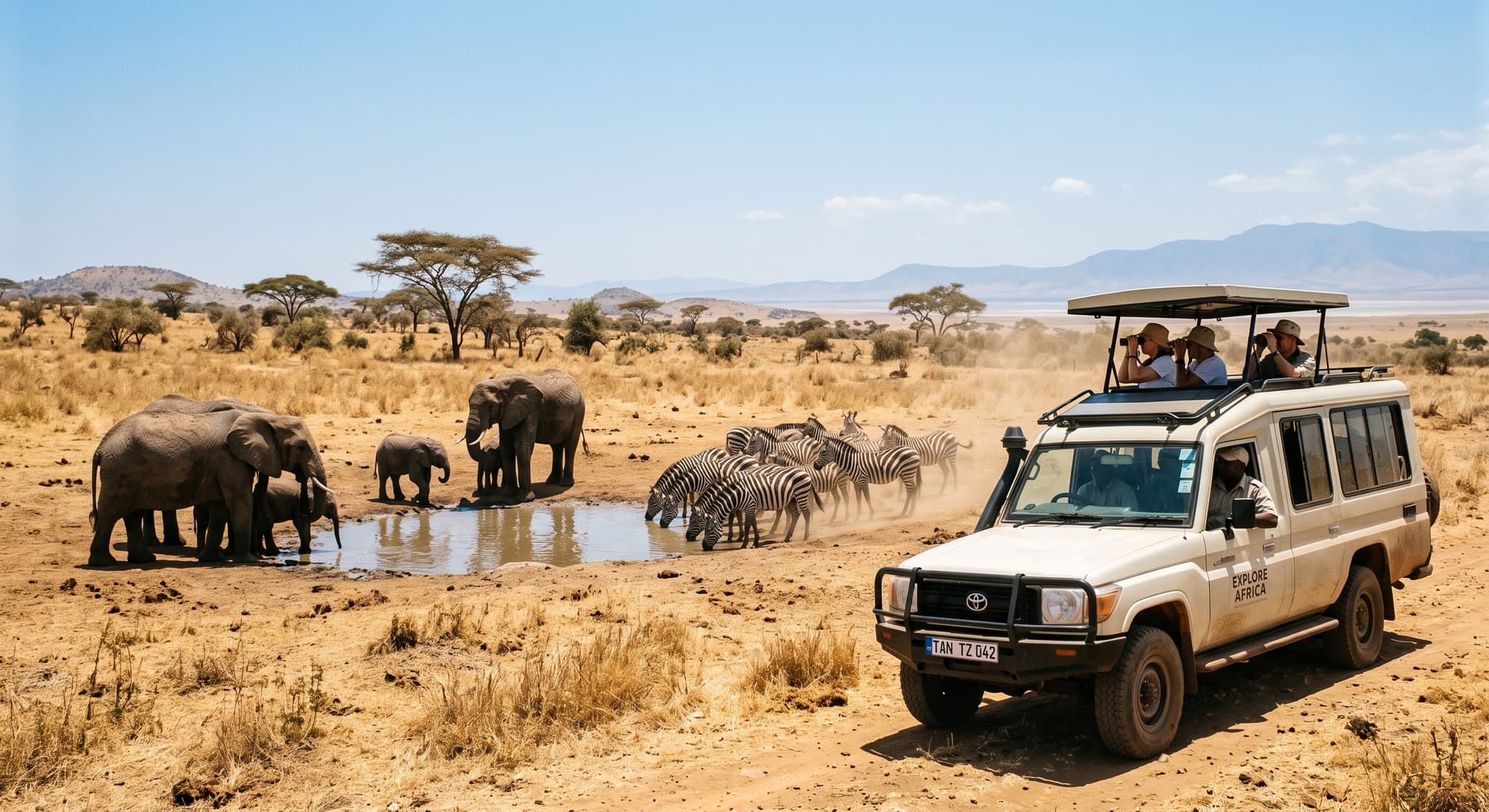
The dry season (broadly May to October in Southern Africa and East Africa) is when game viewing is generally at its best. With little rainfall, vegetation thins out, waterholes shrink, and animals have no choice but to congregate around the remaining water sources — rivers, pans, and boreholes. That means more animals in more predictable spots, which translates directly to better sightings from your game-drive vehicle. Mornings and evenings are cool, the roads are firm and passable, and the sky is usually a deep, photogenic blue. Note on the exception: While the surrounding Kalahari in Botswana dries out, the Okavango Delta experiences its peak annual flood during the dry winter (roughly June to August). This Angolan floodwater (the water takes about four months to travel slowly through the river system) creates prime mokoro and boating conditions only during the dry season.
The wet (green) season runs from roughly November to April across much of the continent. The bush transforms: dusty scrub becomes a sea of vivid green, seasonal rivers flow, and the whole ecosystem pulses with new life. Newborn animals appear — wildebeest calves (it peaks between late January and early March on Tanzania's southern Serengeti/Ndutu plains) and impala lambs. Migratory birds arrive in extraordinary numbers. And the photography, with those dramatic storm-lit skies, is often extraordinary.
Fun fact: Elephant calves do not have a seasonal calving peak; breeding herds give birth year-round after a 22-month gestation. Breeding herds have successfully adapted to give birth year-round, relying on their complex herd structures and multi-year weaning processes to protect calves across all seasons.
The Exception: Cape Town and the Western Cape operate on a Mediterranean climate. Their wet season runs from June to August (winter), while their dry season runs from November to March (summer). Because popular multi-destination itineraries—especially for travellers flying from Australia—frequently combine a Kruger safari with a stay in Cape Town, travellers booking a trip in July would experience ideal, dry bush conditions in Kruger, but would land in a chilly, rainy winter in Cape Town. The ideal time for a combined Kruger safari and Cape Town holiday is the shoulder season months of September and October.
The catch with the wet season is that thick vegetation can make it harder to spot animals, some roads become impassable after heavy rain, and a handful of remote camps close entirely. But for the right traveller, it's far from a consolation prize.
High Season vs Low Season: Crowds, Costs, and Honest Trade-Offs
High season roughly aligns with the dry season — peak demand, peak prices, and peak crowds. In iconic parks like the Masai Mara in Kenya, the Serengeti in Tanzania, and South Africa's Kruger, July and August can mean dozens of vehicles converging on a lion sighting. The wildlife is spectacular, but the experience can feel more like a traffic jam than a wilderness encounter.
Prices reflect the demand. During peak dry-season months, a mid-range East Africa safari can run USD 500–900 per person per day; premier-tier camps push well beyond that. Booking windows for peak July–October departures are typically 9–15 months in advance for the best camp availability — 6 months is the realistic minimum.
Low season — the green season, roughly November to April — is a different world entirely. Luxury lodges that command a premium in August can drop their rates significantly; savings of up to 40–50% compared to peak-season prices are genuinely achievable. Many operators run stay-4-pay-3 deals, waive single supplements for solo travellers, and offer flexible package terms. The trade-off is thicker bush, a slightly higher chance of rain, and some closed or inaccessible roads.
Shoulder season (typically May–June and October–November) is where many experienced safari-goers find the sweet spot: wildlife conditions are improving or still excellent, prices are more moderate than peak, and you share the bush with fewer vehicles. Early June in the northern Serengeti or October in Southern Africa's Kruger can deliver peak-quality game viewing at noticeably softer prices.
A note for Australians: Our July school holidays fall smack in the middle of Africa's peak dry season — great for wildlife, but you'll pay peak prices and compete with Northern Hemisphere summer travellers too. If you have flexibility, consider June or September, when conditions are still superb but the crowds thin slightly.
East Africa vs Southern Africa: The Seasons Don't Quite Match
It's a mistake to treat 'Africa' as a single weather system. The dry and wet seasons in East Africa and Southern Africa don't run in perfect lockstep — which actually works in your favour if you're planning a longer trip or deciding between destinations.
East Africa (Kenya, Tanzania) has two wet seasons: the 'long rains' from late March to May, and the 'short rains' from November to December. The prime dry-season window is June to October, peaking in July–September for the Great Migration river crossings. While river crossings peak from late July through September, October represents a late-stage window where crossing numbers dwindle as herds begin gathering to push south ahead of the short rains. January and February also deliver exceptional game viewing — calving season in Tanzania's Serengeti fills the plains with newborn wildebeest, and predators follow closely behind.
Southern Africa (South Africa, Botswana, Zimbabwe, Zambia, Namibia) operates on a single rainy season from roughly November to April. The dry season runs May to October, with conditions building towards their best in August–October when waterholes are at their most depleted and game is densest. South Africa's Kruger National Park is widely regarded as one of the most consistent year-round safari destinations on the continent, with good game viewing even in the green season.
The practical upshot: If your travel window is December–March (i.e., Australian summer holidays), Southern Africa is in full green season — challenging for game viewing but beautiful and cheap. East Africa in the same period is more mixed: January–February is actually excellent in Tanzania. If you're travelling in June–September, both regions are firing on all cylinders, but prices and competition for beds peak accordingly.
The Great Migration: Africa's Greatest Wildlife Show — and When to Catch It
No safari conversation about timing is complete without the Great Migration — the year-round movement of over 1.5 million wildebeest, zebra, and gazelle across the Serengeti–Masai Mara ecosystem. It's not a single event; it's a continuous cycle, and every stage of it is worth seeing.
Here's a simplified timeline:
- January–March: Calving season on Tanzania's Ndutu Plains (Serengeti south). Hundreds of thousands of calves born in a matter of weeks, triggering intense predator activity. Dramatic, and less crowded than the river crossings.
- June–July: The herds reach the Grumeti River in western Serengeti — the first major river crossing of the cycle, with Nile crocodiles lying in wait.
- July–October: The main Mara River crossings, as herds push north into Kenya's Masai Mara. August is considered peak — the most dramatic crossings, but also the most vehicles, and the highest prices. July and early September can offer similar drama with marginally fewer people.
- November–December: Herds begin moving south again as short rains arrive, returning to Tanzania's short-grass plains.
One important caveat: river crossings cannot be predicted to the day. The wildebeest follow the rains, not the calendar. Experienced safari operators will tell you to build several days near the Mara River into your itinerary — the crossings are worth waiting for, but guaranteeing one on a three-night fly-in is ambitious. Book lodges as close to the river as possible to cut down on travel time.
The Green Season Reframe: Why 'Low Season' Isn't a Bad Season
The safari industry's naming conventions do the green season no favours. Call it 'low season' and most travellers assume they're getting a lesser experience. In reality, the wet season offers things the dry season simply can't.
The landscape. Africa in green season is a different continent. The ochre-and-dust palette of August gives way to vivid emerald, full rivers, and skies lit by afternoon thunderstorms. For photographers, the quality of light — soft, dramatic, with billowing clouds and golden-hour backdrops — is arguably the finest of the year.
The animals. The 'baby boom' of the wet season — newborn impala, wildebeest calves, elephant calves, lion cubs — adds genuine emotion to every game drive. Predators are active and hunting, often with cubs of their own in tow.
The birds. If you're even a casual birding enthusiast, the green season is transformative. Hundreds of migratory bird species arrive between November and April, turning places like Botswana's Okavango Delta and Tanzania's Lake Manyara into extraordinary spectacles.
The exclusivity. Fewer vehicles at sightings means more time to watch, more time for your guide to explain, and more time to simply sit and absorb. In July, you might share a leopard sighting with twelve other vehicles. In November, you might have it to yourself.
The price. It bears repeating: the savings are real. Green-season pricing at a lodge that costs AUD 1,500 per person per night in August might drop to AUD 800–1,000. Over a 10-night itinerary, that difference is meaningful.
The caveats are genuine — some roads and remote camps are inaccessible in the heaviest rains, and visibility through lush vegetation requires more patience. But for the right traveller — particularly those who've already 'done' the dry season — the green season is a revelation.
Africa's Safari Seasons at a Glance
Dry Season (High Season)
May – October
Best overall game viewing. Animals gather at waterholes. Clear skies. Peak prices and crowds. Book 9–15 months ahead for top camps.
Green Season (Low Season)
November – April
Lush landscapes, baby animals, spectacular birdwatching. Savings of 30–50% vs peak. Some camps close; thick vegetation can reduce sightings.
Shoulder Season
May–June & Oct–Nov
The sweet spot. Excellent wildlife, fewer crowds, and more moderate pricing. Often the best value on the calendar. Keep in mind, while game viewing is concentrated, October in the Lowveld, Chobe, and the Zambezi Valley brings extreme heat spikes (regularly exceeding 38°C).
Great Migration Crossings
July – October
Mara River crossings in Kenya's Masai Mara peak in August. Unpredictable — allow several days near the river. Book at least 12 months ahead.
Calving Season
January – March
Wildebeest calving in Tanzania's Serengeti/Ndutu. Extraordinary predator activity. Fewer crowds than river-crossing season.
Australian School Holidays
July peak overlap
July holidays coincide exactly with Africa's peak dry season. Good for families, but plan to pay peak rates and book very early.
Frequently Asked Questions
What is the single best month to go on safari in Africa?
If you want one answer: August. It sits at the heart of the dry season across both East and Southern Africa, delivers the most reliable game viewing of the year, and coincides with the peak of the Great Migration river crossings in Kenya. The trade-off is peak prices and peak crowds. If that's not appealing, July and September offer nearly identical wildlife conditions with marginally fewer vehicles.
Is it worth going on safari in the wet (green) season?
Absolutely — with eyes open. The green season offers lush scenery, a 'baby boom' of newborn animals, superb birdwatching, and savings of 30–50% compared to peak rates. Wildlife viewing requires more patience (thicker vegetation), some remote camps close, and heavy rain can restrict road access. For travellers who prioritise value, photography, or birdwatching — or who want a more exclusive, less crowded experience — the green season is genuinely excellent.
Does the timing differ between East Africa and Southern Africa?
Yes. East Africa (Kenya, Tanzania) has two wet seasons — long rains late March –May and short rains November–December — making January–March and June–October the prime windows. Southern Africa (Kruger, Botswana, Zambia, Zimbabwe) has a single rainy season from November to April, with the dry season May–October being optimal. If you're travelling in Australian summer (December–February), Tanzania in January delivers outstanding calving-season safaris while much of Southern Africa is in its wet season.
When is the Great Migration, and can I guarantee seeing a river crossing?
The Migration is a year-round cycle, but the famous Mara River crossings — where wildebeest plunge into crocodile-infested water — happen roughly July to October, with August being the peak. No operator can guarantee a crossing on a specific day; the herds follow rainfall patterns, not the calendar. To maximise your chances, book a camp close to the Mara River and allow at least four to five days in the area.
How far in advance do I need to book a safari from Australia?
For peak-season travel (July–October), aim for 9–15 months in advance for the best lodge availability. For Christmas and New Year, book by July of the year prior. Shoulder and green-season trips are less time-pressured but 4–6 months is still wise for popular properties. Given Australia's long-haul flight complexity, locking in both your lodge and flights early gives you the most flexibility.
Are African school holiday dates relevant for Australian safari travellers?
Only indirectly. Australian July school holidays fall in Africa's peak dry season, so you'll be competing with European and North American summer travellers as well. Prices will be high and popular camps booked out early. If your children are school-aged and July is your only window, absolutely go — the wildlife will be outstanding — but book at least 12 months ahead and budget for peak-season pricing.