Wildlife· 11 min read· Explore Africa editorial · Published June 2026 · Updated 22 Sept 2026
Your First Safari in Kruger National Park: Everything You Need to Know Before You Go
Kruger National Park is one of Africa's most accessible and wildlife-rich safari destinations — and it's surprisingly doable for first-time Australian visitors on almost any budget. Here's your no-nonsense guide to planning it right.
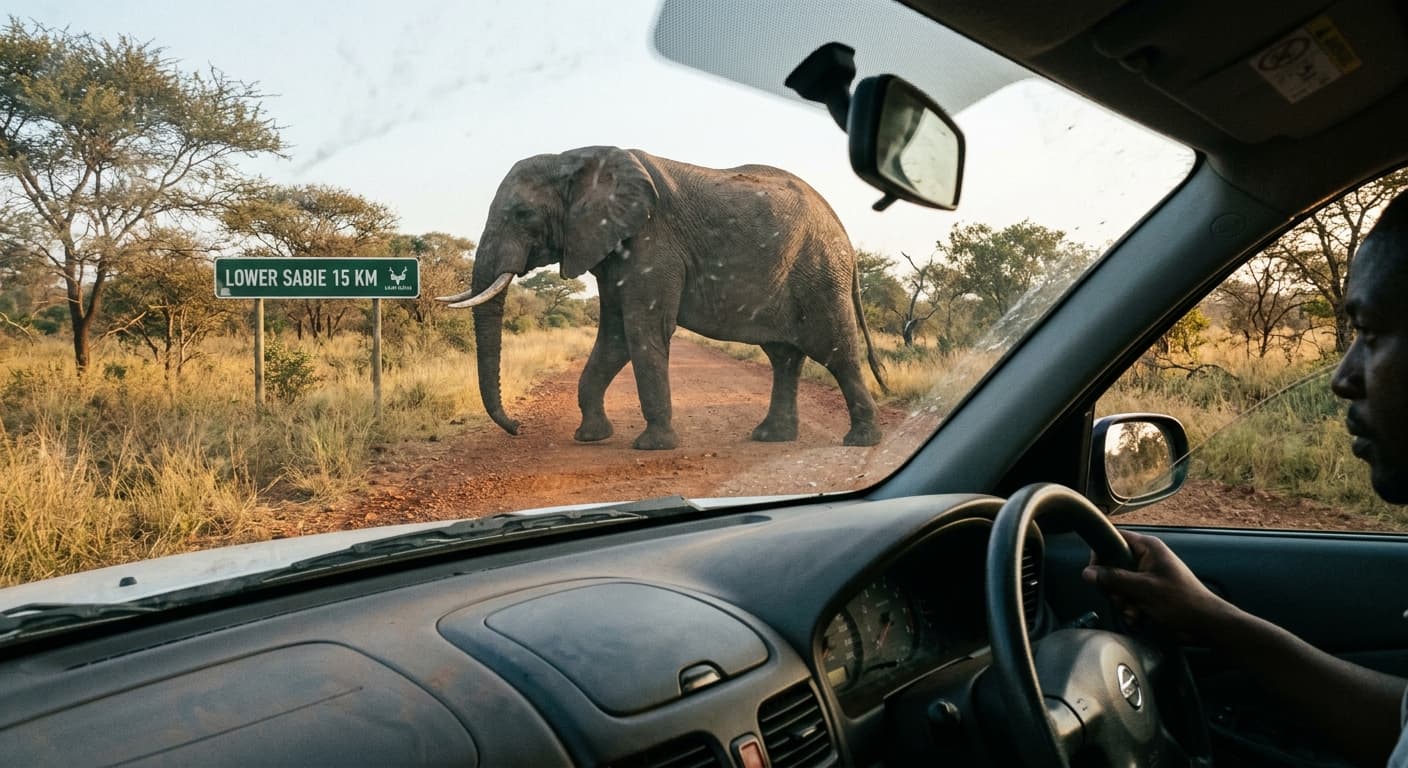
Picture this: it's 6am, your hire car windows are fogging in the cool winter air, and a bull elephant — close enough that you can hear the rumble in his chest — ambles across the gravel road ahead. You haven't been inside Kruger National Park for twenty minutes.
This is the thing about Kruger. It doesn't make you wait. Africa's most famous national park stretches across more than 19,000 square kilometres of South Africa's northeast, and it is home to an extraordinary concentration of wildlife: roughly 1,500 lions, 17,000 elephants, 48,000 buffalo, 1,000 leopards and a vulnerable rhino population, alongside 147 mammal species, 507 bird species and enough reptiles and amphibians to keep a wildlife nerd busy for a week. For first-timers, it offers something rare: a genuine, unscripted encounter with wild Africa that doesn't require a six-figure lodge budget. Here's everything you need to know before you board that flight.
Why Kruger Is the Perfect First Safari
Not all African national parks are created equal for the first-timer. Many require exclusive fly-in lodges, strict guide-only access, and eye-watering daily rates. Kruger is different. It has a reliable network of tarred and gravel roads that any ordinary hire car can handle, a system of SANParks-managed rest camps dotted throughout the park, and a conservation fee structure that makes it genuinely accessible across a wide range of budgets.
You can do Kruger as a self-drive safari — navigating at your own pace in your own vehicle — or you can book guided game drives through the rest camps if you'd rather leave the tracking to an expert. Either way, the odds of spotting the Big Five are genuinely high. The Big Five (lion, elephant, buffalo, rhino and leopard) are so well-represented that even a first-time visitor can sometimes cross all five off the list in a single day.
For Australians, there's another practical appeal: the roughly 14.5 to 15 hours flight from Sydney to Johannesburg (Perth–Johannesburg service is shorter (approx. 11 hours 15 minutes outbound / 9 hours 55 minutes return), followed by a short domestic hop or a four to five hour drive, makes Kruger one of the most straightforward African safaris to reach from the Southern Hemisphere. South Africa's seasons are also aligning directly with Australia's — meaning Kruger's prime dry season (May to October) falls squarely within the Australian winter school holidays, making it a natural fit for families.
When to Go: Seasons, Wildlife and the Australian School Holiday Sweet Spot
Kruger is a year-round destination — every month delivers something different — but the timing of your visit will shape the kind of experience you have.
Dry Season (May–October): The Classic Safari Window
This is widely regarded as the best time for wildlife viewing. As rainfall stops, vegetation thins out and trees shed their leaves, opening up long sightlines across the savannah. With limited water sources available, animals congregate at rivers, dams and waterholes — a predictable gathering that makes spotting predators and big game far more consistent. Daytime temperatures are pleasant (around 20–27°C in peak winter), though early mornings can be genuinely cold — single digits in June and July are not unusual, so pack a fleece.
July and August are the peak visitor months, so book accommodation well in advance. The shoulder months of May, June, September and October offer almost as good game viewing with fewer crowds.
Wet Season (November–April): Lush, Hot and Full of Life
Summer brings spectacular afternoon thunderstorms, vivid green landscapes and a pulse of new life. Impala, zebra and wildebeest calving seasons peak around December and January, drawing predators in close. This is also Kruger's best season for birdwatching — migratory species arrive in force, and the park's 507 bird species are at their most active. The trade-off is heat (daytime temperatures regularly exceed 35°C), higher humidity, and dense vegetation that can make spotting animals more challenging. Malaria risk is also significantly higher during the wet season (more on that below).
For Australian Travellers: The June–August window aligns perfectly with Australian school holidays and winter, making it both convenient and climatically sensible. Book camps six to twelve months ahead for this period.
Kruger National Park: Fast Facts
Park Size
19,485 km²
Roughly the size of Wales — or about half of Tasmania. You won't see all of it in one trip.
Wildlife Count
147 mammal species
Including ~1,500 lions, ~17,000 elephants, ~48,000 buffalo and ~1,000 leopards. Plus 507 bird species.
Conservation Fee (International)
~R602 per adult / R300 per child
Valid through 31 October 2026 (tariffs update annually on 1 November). SANParks Kruger National Park tariff guide
Best Months for First-Timers
June–September
Dry season: sparse vegetation, animals at waterholes, cooler temps, peak Big Five sightings.
Speed Limits
50 km/h tar / 40 km/h gravel
In practice, slow to 20–30 km/h when scanning for animals. You'll miss most sightings at full speed.
Minimum Stay
3–5 days
The bare minimum to see one region properly. A week gives you time to explore north and south.
Self-Drive or Guided Game Drive? The Honest Breakdown
One of Kruger's most distinctive features is that you genuinely don't need a guide to have a world-class safari experience — though both options have real merits.
Self-Drive Safari
Driving yourself through Kruger is one of Africa's great travel experiences. You set your own pace, linger at a waterhole as long as you like, and experience the thrill of finding animals independently. Kruger's tarred and gravel road network is well-maintained and signposted, and a standard hire car (no 4WD required for most routes) is perfectly adequate. The key rule: stay in your vehicle at all times unless you're inside a designated rest camp or at a marked viewpoint.
The speed limits — 50 km/h on tar and 40 km/h on gravel — are strictly enforced, and for good reason. Slowing down to 20–30 km/h on game-rich roads is where most sightings happen. Arriving at a gate 30–45 minutes before the camp gates open means you're among the first vehicles on the road at prime wildlife activity time: just after sunrise.
Official schedules from the SANParks Kruger National Park Gate Times Guide show that internal camp gates and external entrance gates operate on distinct schedules depending on the season:
Summer Months (November to January): Internal camp gates open at 04:30, giving overnight park guests a full one-hour head start over day visitors waiting at the external perimeter gates, which do not open until 05:30.
Winter Months (April to September): The schedules align, with both camp gates and entrance gates opening simultaneously at 06:00.
Guided Game Drives
If you'd prefer expert eyes, guided game drives are available through all the main SANParks rest camps, run by rangers who know the terrain and animal behaviour intimately. These are particularly valuable for spotting leopards and tracking predators on foot (walking safaris are also available from select camps). Booking in advance is essential — especially in peak season — though same-day bookings are sometimes possible at reception.
Our recommendation for first-timers: Do both. Self-drive your days, and book at least one guided morning or evening drive through your rest camp to benefit from a ranger's knowledge.
Where to Stay: Rest Camps and What to Expect
SANParks operates a network of rest camps spread across the park, ranging from large, well-equipped camps with restaurants, shops and swimming pools to small, remote bush camps for those who want a more stripped-back experience.
Southern Kruger (the classic starting point)
The south is where most first-timers begin — and for good reason. This region has the highest density of game-viewing roads, the most varied terrain, and some of the park's best wildlife sightings. Key camps include:
- Lower Sabie: Perched on the Sabie River, consistently rated one of the park's best camps for game density and views. A strong recommendation for first-timers.
- Skukuza: The largest rest camp — almost a small village — with the widest range of facilities, activities and accommodation types. Great if you're travelling with family.
- Berg-en-Dal: Set in rugged terrain near the southern boundary. Good for white rhino sightings.
Accommodation types range from camping and basic safari tents through to self-catering chalets and more comfortable guesthouses. Rest camps have well-stocked shops and most have restaurants, so self-catering is straightforward.
Book early. Accommodation at SANParks camps is booked through the SANParks website and fills quickly — six to twelve months in advance for the June–August peak period is not an exaggeration. Day visitors are also welcome but must enter and exit within gate hours, which change seasonally.
Health, Safety and the Malaria Question
Kruger National Park is a malaria risk zone — this is the most important health consideration for any first-time visitor, and it shouldn't be glossed over.
Malaria risk
The risk varies significantly by season. The wet season (October to May) carries substantially higher risk, with February to May being the peak. The dry winter months carry a lower but still present risk. SANParks itself advises all travellers to consider antimalarial medication, and the official recommendation is to take chemoprophylaxis — preventive medication prescribed by your GP — for any visit. Consult your doctor at least 6–8 weeks before travel, as some medications need to be started a week or more before you arrive.
Mosquitoes are most active between dusk and dawn. Practical steps: use a DEET-based repellent, cover exposed skin after sunset, and sleep in screened accommodation. Rest camp chalets and tents are all screened, but check this when booking.
General safety
Kruger is a wild environment and the rules exist for good reason. Never exit your vehicle in the open bush, never feed any animal, and always respect gate times — returning to camp after dark is not permitted and carries a fine. The park is a safe, well-managed destination for tourists, but the animals are genuinely wild and unpredictable. This is precisely what makes it extraordinary.
Frequently Asked Questions
Do I need a 4WD to self-drive in Kruger?
No. The main road network in Kruger is tarred or well-maintained gravel, and a standard sedan or SUV hire car handles it comfortably. Some remote roads in the far north do benefit from higher clearance, but first-timers sticking to the southern and central park won't need a 4WD.
How much does it cost to enter Kruger?
As of November 2024–October 2025, international visitors pay approximately R602 per adult per day in conservation fees. Children under 11 (with children under 2 free) pay approximately R300 per day. Rates are updated annually by SANParks — always check the official SANParks website for current tariffs before you travel.
Is Kruger safe for solo travellers?
Yes — Kruger is one of the most visited parks in Africa and is well set up for independent travellers, including those going solo. The rest camps are secure, well-lit and sociable places where you'll quickly meet other travellers. The key safety consideration in the open park is to remain in your vehicle and follow all park rules.
How long should I spend in Kruger?
A minimum of 3–5 days gives you enough time to explore one region of the park properly. A full week is ideal and lets you cover both the wildlife-dense south and the more remote, wilderness-feel north. Even a two-day visit is worthwhile if that's all you have — just manage your expectations of reaching every corner.
What's the best way to get to Kruger from Australia?
Most Australian travellers fly into Johannesburg's OR Tambo International Airport, then connect to the Kruger region by domestic flight or rental car. Domestic flights from Johannesburg serve Kruger Mpumalanga International Airport (near Mbombela), Hoedspruit Eastgate Airport, and Skukuza Airport directly inside the park. By road from Johannesburg, the drive to the southern Kruger gates takes approximately four to five hours.
Will I definitely see the Big Five?
There are no guarantees in the wild — that's partly what makes it so compelling. That said, Kruger's game density is exceptional, and most visitors who spend 3–5 days in the park during the dry season will see four or five of the Big Five. Lions and elephants are commonly sighted; leopards are the most elusive and often spotted at rest in trees. Adjust your expectations and remember: every sighting, from a family of warthogs to a martial eagle, is part of the experience.