country· 14 min read· Explore Africa editorial · Published August 2026 · Updated 30 Oct 2026
Kenya: the Mara, the Migration & the cradle of safari
Everything Australian travellers need for Kenya — the eTA, money and M-Pesa, malaria and yellow-fever rules, the Great Migration's timing in the Masai Mara, when to go, and how to get around. The practical groundwork, so you can focus on the safari.
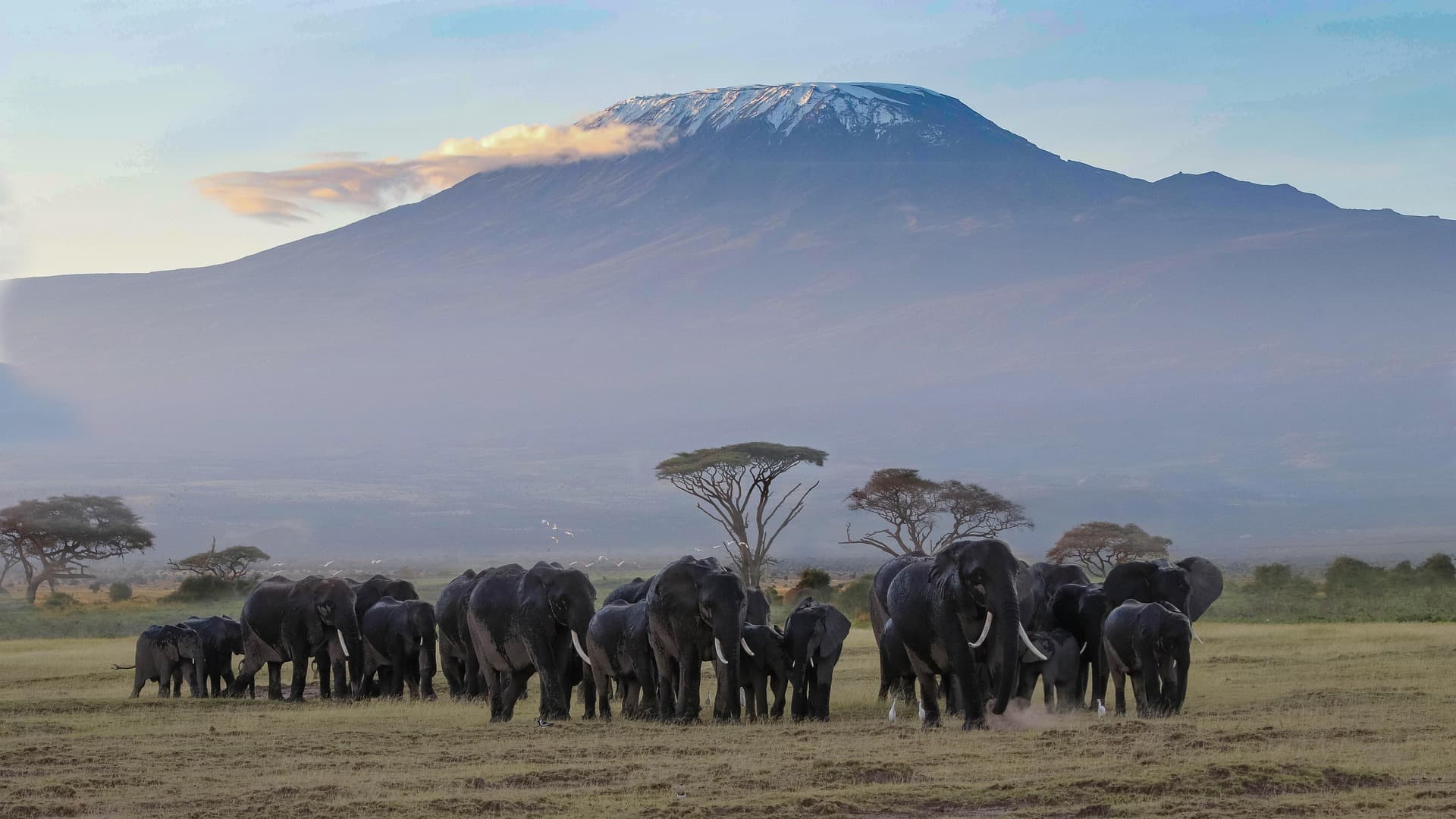
Kenya is the birthplace of the safari — and for many Australians it's the trip of a lifetime. This is the home of the Great Migration, where more than a million wildebeest thunder across the Masai Mara each year; of Amboseli's elephants framed by Mount Kilimanjaro; of flamingo-pink lakes, the Samburu wilds and warm Indian Ocean beaches at Diani. English is an official language and widely spoken, the safari industry is world-class, and a single trip can pair big-game plains with a Swahili-coast wind-down. Australians do need to arrange an electronic travel authorisation (eTA) before they fly. This guide covers the practical things — money, health, safety, when to go and how to get around — so the only thing left to plan is what to see.
At a glance
- Capital
- Nairobi
- Currency
- Kenyan Shilling (KES / KSh)
- Languages
- Swahili & English (official)
- Time zone
- EAT (UTC+3) · 7–8 hrs behind Sydney
- Dialling code
- +254
- Electricity
- 240V / 50Hz · plug Type G
- Driving
- On the left
- Visa (Australians)
- eTA required before travel
Kenya month by month
🌡 Warm–hot · 24–30°C
💧 Mostly dry
Hot, dry weather across the parks — excellent wildlife viewing, with thinning bush. Glorious on the coast.
🌡 Hot · 25–31°C
💧 Driest
The hottest, driest stretch of the year. Superb game viewing as animals gather at water; calving season in the southern plains.
🌡 Warm · 24–30°C
💧 Long rains begin late
A good-value shoulder month before the long rains arrive late in the month. Still dry and warm early on.
🌡 Warm · 23–28°C
💧 Long rains (peak)
The wettest month — afternoon downpours green the landscape. Low season with the best prices; some camps close. Lush birding.
🌡 Mild–warm · 22–27°C
💧 Long rains easing
Rains tailing off; the country is at its greenest and quietest. Beautiful light and very few crowds.
🌡 Mild · 21–27°C
💧 Drying out
The dry season returns — the start of prime safari. Cooler, crisp mornings; pack a warm layer for dawn game drives.
🌡 Cool–mild · 20–26°C
💧 Dry
👥 Migration begins · AUS school holidays
Wildebeest of the Great Migration start arriving in the Masai Mara from the Serengeti. Cool, dry and excellent for wildlife.
🌡 Cool–mild · 20–26°C
💧 Dry
👥 Peak — Migration
The Migration fills the Mara plains and dramatic Mara River crossings can be seen. Kenya's busiest, most spectacular safari month — book early.
🌡 Mild · 21–27°C
💧 Dry
👥 Migration
The herds are still in the Mara and game viewing is superb, with slightly thinner crowds than August.
🌡 Warm · 22–28°C
💧 Mostly dry
Hot, mostly dry and excellent — the Migration begins to wind back south. A favourite month for many travellers.
🌡 Warm · 22–28°C
💧 Short rains
The 'short rains' bring brief afternoon showers that rarely disrupt a trip. Green, fewer crowds and wonderful birding.
🌡 Warm · 23–29°C
💧 Short rains easing
👥 Coast peak
Showers ease towards a green, lush landscape. Festive-season crowds and higher prices on the coast over the holidays.
Top experiences
Masai Mara & the Great Migration
Kenya's headline safari
Big-cat country and the stage for the Great Migration (roughly July–October), when over a million wildebeest cross the plains and brave the crocodile-filled Mara River.
Amboseli
Elephants & Kilimanjaro
Big-tusked elephant herds on open plains beneath the snow-capped cone of Mount Kilimanjaro across the border — one of Africa's iconic views.
Samburu & the north
Rugged wilderness
Arid northern reserves on the Ewaso Ng'iro River, home to the 'Samburu Special Five' — Grevy's zebra, reticulated giraffe, gerenuk, oryx and Somali ostrich.
Lewa & Laikipia conservancies
Rhino & walking safaris
Private conservancies leading rhino conservation, with low vehicle density, walking safaris and night drives you can't do in the national parks.
Lake Nakuru
Flamingos & rhino
A Rift Valley soda lake fringed by flamingos, and a fenced sanctuary that's one of the best places in Kenya to see both black and white rhino.
Diani Beach & the coast
Indian Ocean wind-down
Powder-white sand, warm turquoise water and a relaxed Swahili-coast vibe — the classic way to end a safari. Historic Lamu and Mombasa are nearby.
Tsavo East & West
Vast wilderness
Kenya's largest protected area — 'red' elephants dusted in ochre soil, sweeping landscapes and a remote, uncrowded feel.
Lake Naivasha & Hell's Gate
Rift Valley
Boat trips among hippos and fish eagles, plus Hell's Gate — one of the few parks where you can walk or cycle among wildlife through dramatic gorges.
Nairobi
Gateway city
Nairobi National Park on the city's doorstep, the Sheldrick elephant orphanage, the Giraffe Centre and the Karen Blixen Museum make a great first or last day.
Mount Kenya
Africa's second-highest peak
A UNESCO-listed massif of glaciers, moorland and forest — trekking routes for the well-prepared and beautiful highland lodges around its foothills.
Getting around
Most international flights arrive at Jomo Kenyatta International Airport (Nairobi); Moi International (Mombasa) serves the coast. Nairobi is the main safari hub.
- Domestic & bush flights — light-aircraft networks (such as SafariLink and AirKenya) connect Nairobi's Wilson Airport to the Masai Mara, Amboseli, Samburu and the coast, saving long drives on rough roads. Expect a strict luggage limit of around 15 kg in a soft-sided bag. The 15 kg limit includes all hand luggage and camera backpacks combined, and bags must be strictly 100% frameless / structureless (no rigid bottoms or wheels), otherwise they will be rejected by bush operators (SafariLink, AirKenya) due to Cessna Caravan cargo pod shapes — check with your lodge before you pack.
- Note: Travellers connecting between international flights (JKIA) and safari flights (Wilson Airport) to allow at least 3 to 4 hours minimum transfer time due to frequent and severe Nairobi traffic bottlenecks between the two airports.
- Private safari vehicles — most safaris are done in a 4WD with a driver-guide, often as a set itinerary between lodges. This is the easiest and most rewarding way to travel.
- Self-drive is possible but less common for first-timers; roads vary and signage can be poor. Driving is on the left.
- In Nairobi, use ride-hailing apps (Uber, Bolt, Little) rather than hailing taxis on the street, and avoid travelling after dark where you can.
Money & payments
The currency is the Kenyan Shilling (KES, written KSh).
- US dollars are widely accepted for safaris, park fees, lodges and tipping — bring clean, newer notes (generally series dated 2013 or later) as old or worn US bills are often refused. Pay for everyday, local purchases in shillings.
- Cards (Visa and Mastercard) are accepted at hotels, lodges and larger establishments; smaller shops, markets and rural areas are cash-only.
- ATMs are common in towns and cities — use ones at banks or inside malls, shield your PIN, and tell your bank you'll be travelling so your card isn't blocked.
- M-Pesa — Kenya's mobile-money system is everywhere and used for everything from taxis to tips. It needs a local Safaricom SIM; handy for longer or independent trips.
- Carry some cash for tips, markets, curio stalls and park gates.
Health before you go
See your GP or a travel clinic about 6–8 weeks before you leave.
- Malaria — present in most of Kenya below about 2,500 m, including the major safari parks, the Rift Valley lakes and the coast. The risk is low in central Nairobi and at high altitude (such as the upper slopes of Mount Kenya). Most travellers should take prescription anti-malarial medication and prevent bites with repellent, long sleeves and trousers at dusk.
- Yellow fever — Kenya is a yellow-fever risk country, and a vaccination certificate is required if you're arriving from, or have transited (usually 12 hours or more) through, another yellow-fever-risk country. Even when not required for entry, the vaccine is recommended for most travellers to Kenya — ask your doctor; it must be given at least 10 days before travel.
- Other vaccines — make sure routine vaccinations are current; many travellers also add hepatitis A and typhoid, and your doctor may discuss others.
- Food & water — drink bottled or filtered water and be sensible with food.
Insurance: good private hospitals exist in Nairobi but care is expensive and remote areas may need air evacuation, so comprehensive travel insurance covering medical evacuation is essential.
Staying safe
Smartraveller advises Australians to exercise a high degree of caution in Kenya overall, due to the threat of terrorism and the level of crime — but the established safari circuit and tourist areas see the great majority of visits pass without trouble.
- Higher-risk areas — Smartraveller advises against travel to the Kenya–Somalia border region and parts of the north-east and coast near it. Check the current map on Smartraveller before booking, as safari areas like the Mara, Amboseli and Samburu sit well away from these zones.
- In Nairobi and the cities — keep valuables out of sight, don't walk around after dark, use ride-hailing apps at night, and use ATMs inside banks or malls.
- Terrorism — there is an ongoing threat; stay alert in crowded public places and follow local advice.
- On safari — lodges, camps and reserves are well-run and safe; follow your guide's instructions around wildlife.
Emergencies: dial 999 or 112 for police, ambulance or fire. Save your lodge's number and the High Commission details below.
Language, people & customs
Kenya's two official languages are Swahili (Kiswahili) and English, and English is used in business, signage and tourism — so you'll get by easily. A few words of Swahili go a long way: jambo (hello), asante (thank you) and karibu (welcome).
Kenyans are warm and hospitable, and greetings matter — take a moment to say hello before getting down to business. Dress modestly in towns and at the coast (much of the coast is Muslim), keep beachwear for the beach, and choose neutral colours on safari. Always ask before photographing people, and be aware that photographing government buildings, airports and military sites is prohibited. Same-sex relationships are criminalised under Kenyan law, so LGBTQIA+ travellers should be discreet.
Staying connected
- Mobile coverage (4G) is good in cities, towns and many tourist areas, though it drops out in remote parks and conservancies — part of the appeal.
- Wi-Fi — most lodges and hotels have it, but it can be slow or limited to common areas.
- SIMs & eSIMs — a prepaid local SIM (Safaricom has the widest coverage) is cheap and also unlocks M-Pesa; bring your passport to register. eSIMs are a convenient alternative if your phone supports one.
- Power — supply can be intermittent in remote areas, but good camps run on solar or generators; bring a power bank for long game-drive days.
Starter packing list
Safari
- Neutral, layerable clothing: khaki, olive, beige — avoid bright colours, and avoid dark blue/black (it attracts tsetse flies)
- Warm fleece & beanie: dawn game drives are cold, especially June–September
- Wide-brim hat & sunglasses
- Binoculars
- High-SPF sunscreen & insect repellent: DEET-based for malaria areas
- Soft-sided duffel: required for light-aircraft transfers (~15 kg limit)
Coast & towns
- Swimwear & a beach cover-up
- Modest outfit for towns and the coast
- Comfortable walking shoes
- Light rain jacket: handy in the green season
Health & documents
- Passport: generally valid 6+ months
- Printed eTA approval
- Travel insurance details: must cover medical evacuation
- Anti-malarials & personal medication
- Yellow-fever certificate: required if arriving via a risk country; recommended otherwise
- Clean, newer US dollar notes: for fees and tips
Practical
- Type G / universal adapter
- Power bank
- Phone with offline maps
- Reusable water bottle
Emergency & embassy contacts
Australian High Commission, Nairobi
+254 20 427 7100
Limuru Road, Rosslyn, Nairobi (between Village Market and Two Rivers mall). Chancery open Mon–Thu 07:45–16:30, Fri 07:45–12:00; consular/visa services by appointment.
Consular emergencies (after hours)
+61 2 6261 3305
DFAT's 24-hour Consular Emergency Centre in Canberra, for Australians needing urgent help overseas.
Police / Ambulance / Fire
999 or 112
Kenya's national emergency numbers. Save your lodge's number too — local help is often the fastest in remote areas.
Frequently asked
Do Australians need a visa for Kenya?
Yes — Australians must obtain an electronic travel authorisation (eTA) online before they fly; there is no visa on arrival. Apply at the official portal etakenya.go.ke (around USD 32.50), ideally at least two weeks ahead, and confirm the current rules on Smartraveller before you travel.
When is the best time to go to Kenya?
The dry months of June to October are prime safari time and coincide with the Great Migration in the Masai Mara (roughly July–October, with dramatic river crossings around August). January–February are also dry and excellent. The 'long rains' (around April–May) bring the greenest scenery, lowest prices and fewest crowds.
Do I need malaria tablets?
For most of Kenya, yes. Malaria is present below about 2,500 m, including the main safari parks, the Rift Valley lakes and the coast; risk is low in central Nairobi and at high altitude. See your doctor 6–8 weeks before for anti-malarials and prevention advice.
Do I need a yellow-fever certificate?
You must show one if you're arriving from, or have transited through, another yellow-fever-risk country (relevant on multi-country African trips). Even when it isn't required for entry, the vaccine is recommended for most travellers to Kenya — ask your doctor, and have it at least 10 days before travel.
Should I bring US dollars or Kenyan shillings?
Both. US dollars (clean, newer notes) are widely accepted for safaris, lodges, park fees and tips, while Kenyan shillings are best for everyday local spending. Cards work at hotels and larger venues; carry cash for markets, tips and rural areas, and consider M-Pesa for longer trips.
Is Kenya safe for tourists?
Smartraveller advises a high degree of caution overall because of terrorism and crime, but the established safari circuit and tourist areas are well-run and most visits are trouble-free. Avoid the Somalia-border region, stay alert in cities, don't walk after dark, and follow your guide's advice on safari.
How much should I tip on safari?
As a guide, around USD 10–20 per guest (or small group) per day for your driver-guide and roughly USD 10–15 per guest per day for general camp staff, plus 5–10% in restaurants. Tip in US dollars or shillings; your lodge will give specific guidance.
Sources & last verified
Last verified: 29 June 2026. This guide is researched from official and authoritative sources and reviewed by Explore Africa. Visa, health and safety rules can change — always confirm the current advice before you travel.
Key sources:
- Smartraveller (Australian Government): smartraveller.gov.au/destinations/africa/kenya
- Kenya eTA official portal: etakenya.go.ke
- Australian High Commission, Nairobi: kenya.highcommission.gov.au
- US CDC Travelers' Health: wwwnc.cdc.gov/travel/destinations/traveler/none/kenya
- Department of Foreign Affairs and Trade (DFAT): dfat.gov.au/geo/kenya