country· 13 min read· Explore Africa editorial · Published June 2026 · Updated 30 Oct 2026
Malawi: the warm heart of Africa & its great lake
The Warm Heart of Africa — Lake Malawi's beaches, snorkelling and kayaking paired with uncrowded Big Five safaris at Liwonde and Majete. Practical advice for Australians on the new visa, money, malaria, bilharzia, when to go and how to get around.
Malawi is the gentle introduction to Africa — small, friendly and astonishingly varied. Locals call it "The Warm Heart of Africa", and the welcome lives up to it. The country's spine is the vast freshwater Lake Malawi, fringed with white-sand beaches and clear water ideal for snorkelling, diving and kayaking. Inland, well-run reserves like Liwonde and Majete now hold the Big Five with a fraction of the crowds you'd find elsewhere, while the highlands of Nyika and Zomba offer cool air, wildflowers and big views. English is an official language and widely spoken, so getting around is easy. This guide covers the practical things — the visa (which changed recently), money, health, safety, when to go and how to get around — so the only thing left to plan is what to see.
At a glance
- Capital
- Lilongwe (commercial hub: Blantyre)
- Currency
- Malawian Kwacha (MWK) · USD used for lodges/safaris
- Languages
- Chichewa & English (both official)
- Time zone
- CAT (UTC+2) · 8–9 hrs behind Sydney
- Dialling code
- +265
- Electricity
- 230V / 50Hz · plug Type G
- Driving
- On the left
- Visa (Australians)
- Visa required — e-visa in advance (since Nov 2025)
Malawi month by month
🌡 Warm · 25–30°C
💧 Heavy rains
Peak of the rains — lush, green landscapes and superb birding, but some bush tracks get muddy. Hot and humid in the lowlands.
🌡 Warm · 25–30°C
💧 Heavy rains
Still wet and green; dramatic skies. The lake and highlands are at their most verdant.
🌡 Warm · 24–29°C
💧 Easing
Rains tapering off; countryside green and quiet, with few visitors and good value.
🌡 Mild · 22–28°C
💧 Low
A lovely transition month — drying out, lush scenery, comfortable temperatures and thin crowds.
🌡 Mild · 20–27°C
💧 Dry
Start of the dry season — clear skies, pleasant days, cooler nights. Bush begins to thin for wildlife viewing.
🌡 Cool · 10–25°C
💧 Dry
Cool, crisp mornings (cold in the highlands). Comfortable days and excellent conditions on the lake.
🌡 Cool · 10–25°C
💧 Dry
👥 AUS school holidays
The coolest, driest stretch — pack warm layers for the highlands and dawn game drives.
🌡 Mild · 13–27°C
💧 Dry
Warming up; reliably dry. Wildlife concentrates near water as the bush dries out.
🌡 Warm · 16–30°C
💧 Dry
👥 Prime safari
Prime game viewing — thin bush and animals gathering at the river and waterholes in Liwonde and Majete.
🌡 Hot · 20–34°C
💧 Dry, building heat
Hottest, driest month and arguably the best for wildlife — but very warm in the lowlands before the rains break.
🌡 Hot · 22–32°C
💧 First rains
The first storms green the bush — fabulous birding and newborn animals, with humidity building.
🌡 Warm · 23–30°C
💧 Rains
Wet, warm and lush; festive-season demand on the lake. Afternoon storms clear to brilliant green.
Top experiences
Lake Malawi
Africa's freshwater jewel
A vast, clear lake fringed with white-sand beaches — swim, snorkel, dive among hundreds of colourful cichlid fish, kayak or sail. The heart of any Malawi trip.
Liwonde National Park
Big Five on the Shire
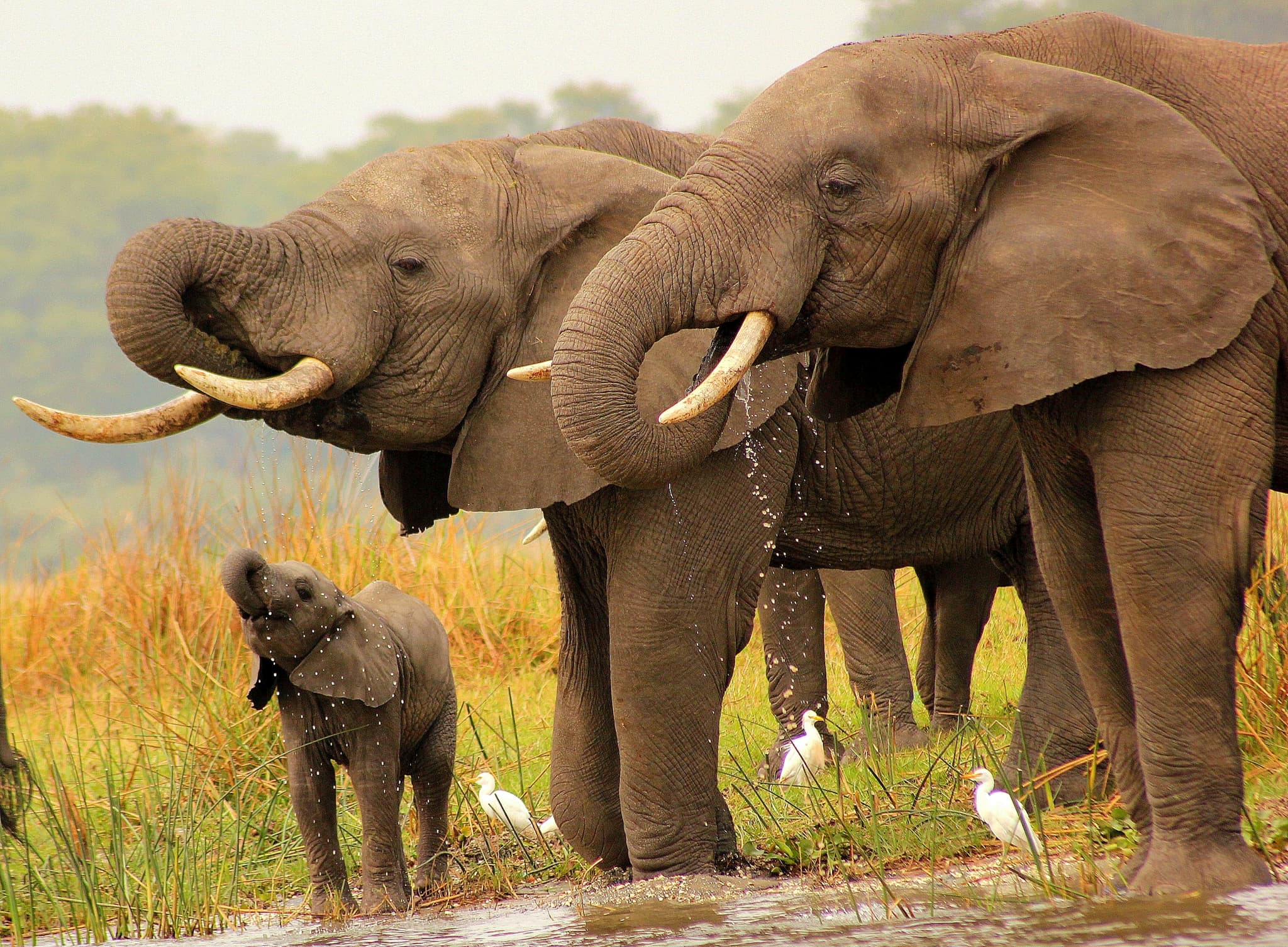
Malawi's flagship park, managed by African Parks — elephants, hippos, rhino and reintroduced lions and cheetah, best explored by boat safari along the Shire River.
Majete Wildlife Reserve
Big Five comeback
A conservation success story — once poached out, now a fenced Big Five reserve with excellent, uncrowded game drives in the Lower Shire valley.
Nyika Plateau
Highland wilderness
Rolling montane grasslands at altitude — roan and eland, zebra, wildflowers, over 200 orchid species and superb walking, mountain biking and birding.
Zomba Plateau
Forests & views
A forested tableland above the old colonial capital — cool air, waterfalls, trout streams and sweeping viewpoints, easy to combine with Liwonde.
Likoma Island
Remote lake escape
A tiny island far out in the lake with a vast stone cathedral, secluded beaches and barefoot lodges — one of Africa's great hideaways.
Mount Mulanje
Trekking
A dramatic granite massif rising from the tea estates — multi-day hut-to-hut hikes to Sapitwa, the highest peak in Central Africa.
Cape Maclear
Lakeshore village
A laid-back lakeside hub inside Lake Malawi National Park — snorkelling trips to nearby islands, fish eagles and golden sunsets over the water.
Getting around
Most travellers fly into Kamuzu International Airport (Lilongwe) or Chileka (Blantyre), usually via Johannesburg, Addis Ababa or Nairobi.
- Domestic & light-aircraft flights save a lot of time on Malawi's bumpy roads and link the main hubs with lake lodges and remote camps (including island airstrips). Charters often have a strict soft-bag luggage limit — check with your lodge before you pack.
- Private transfers & guided road trips are the usual way to link the lake, parks and highlands; distances look short on a map but roads can be slow.
- Self-drive is possible but better suited to confident travellers — roads vary, signage is limited and a 4WD is wise in the wet. Driving is on the left.
- Boat transfers (and the historic Ilala ferry) connect lakeshore villages and islands.
- Avoid driving at night — livestock, pedestrians and unlit vehicles make rural roads hazardous after dark.
Money & payments
The currency is the Malawian Kwacha (MWK). Malawi is very much a cash economy.
- US dollars are widely used to settle lodge, safari and park fees — bring clean, newer notes (smaller, older bills are often refused).
- Cards are accepted at upmarket hotels and some lodges, but acceptance is patchy — never rely on them. Carry enough cash.
- ATMs are found in cities and larger towns but can be unreliable, run out of cash or cap withdrawals; use ones at banks and shield your PIN.
- Change money at banks or licensed bureaux, not on the street.
- Tell your bank you'll be travelling, and carry a backup card.
- Keep small Kwacha notes for tips, markets, crafts and village purchases.
Health before you go
See your GP or a travel clinic about 6–8 weeks before you leave.
- Malaria — present throughout Malawi, all year, including the lakeshore. This is a genuine risk: take anti-malarial medication (the parasite is chloroquine-resistant, so options like atovaquone-proguanil, doxycycline or mefloquine are used), use repellent, cover up at dusk and sleep under a net.
- Bilharzia (schistosomiasis) — a parasite carried by freshwater snails is present in Lake Malawi and other fresh water. It's easy to catch from swimming or wading and often has no early symptoms. Reduce the risk by swimming off deeper water away from reedy shallows (operators can advise on lower-risk spots), drying off briskly, and — importantly — getting a simple blood test for bilharzia a few weeks after you return home, as it's easily treated once diagnosed.
- Yellow fever — no risk in Malawi, but you must show a vaccination certificate if you arrive from, or have transited, a yellow-fever-risk country (relevant on multi-country African trips). A certificate is only required if transiting for more than 12 hours through an airport in a country with risk of yellow fever transmission (e.g. Addis Ababa or Nairobi).
- Routine & recommended vaccines — make sure routine vaccinations are current; travel doctors commonly recommend hepatitis A, typhoid and others. Ask about rabies and cholera depending on your plans.
- Food & water — drink bottled, boiled or filtered water and avoid ice and unpeeled raw produce in basic settings.
Insurance: medical facilities are limited, so comprehensive travel insurance that covers medical evacuation is essential.
Staying safe
Malawi is one of Africa's friendlier, more relaxed destinations, and most visits are trouble-free. Smartraveller advises Australians to exercise a high degree of caution — sensible precautions go a long way.
- Petty crime — bag-snatching, pickpocketing and theft from vehicles occur, mainly in Lilongwe, Blantyre and busy markets and bus stations. Keep valuables out of sight and don't walk alone after dark.
- On the road — keep doors locked and windows up in towns, and avoid driving at night.
- Water safety — the lake can have strong winds, sudden squalls and currents; wear a life jacket on boats and heed local advice.
- Local laws — same-sex relationships are criminalised in Malawi and carry severe penalties; LGBTQIA+ travellers should be aware of this. Dress modestly away from beach resorts.
- Emergencies: Police 997 · Ambulance 998 · Fire 999 (reliability varies, especially in rural areas). Save your lodge's number and the Australian mission details below.
- Legal & Photography Restrictions - Note that photographing military personnel, police checkpoints, government buildings, presidential motorcades, State House, or critical infrastructure (airports, bridges) is strictly prohibited under Malawian law and can lead to confiscation of gear or arrest.
Language, people & customs
Malawi has two official languages — Chichewa (the most widely spoken) and English, which is used in business, signage and tourism, so you'll get by easily. A few words of Chichewa are warmly received: moni (hello), zikomo (thank you and excuse me).
Malawians are famously warm and courteous — greetings matter, so take a moment to say hello before getting down to business. Dress is generally modest, especially in villages and towns; cover shoulders and knees away from the beach. Always ask before photographing people, particularly in rural areas. A relaxed, respectful manner and a smile open most doors in the Warm Heart of Africa.
Staying connected
- Mobile coverage is reasonable in cities, towns and along the main lakeshore, but patchy or absent in remote parks and highlands.
- Wi-Fi is available at many lodges and hotels, though it can be slow or limited to common areas — a welcome chance to switch off.
- SIMs & eSIMs — local prepaid SIMs (TNM, Airtel) are inexpensive; bring your passport to register one. Travel eSIMs are a convenient alternative.
- Power — electricity supply can be unreliable with outages ("load-shedding"); good lodges run on generators or solar. Bring a power bank and charge when you can.
Starter packing list
Safari
- Neutral, layerable clothing: khaki, olive, beige — avoid bright colours and black/dark blue
- Warm fleece & beanie: cool mornings on drives and in the highlands
- Wide-brim hat & sunglasses
- Binoculars
- High-SPF sunscreen & insect repellent: DEET-based — malaria is present year-round
- Soft-sided duffel: for light-aircraft transfers
Lake & water
- Swimwear & quick-dry towel
- Reef-safe sunscreen & rash vest
- Water shoes: rocky lakeshore entries
- Dry bag: for boat trips and kayaking
- Snorkel/mask: optional — many lodges supply gear
Health & documents
- Passport: valid 6+ months, with blank pages
- Printed e-visa approval: apply at evisa.gov.mw before you fly
- Travel insurance details: must cover medical evacuation
- Anti-malarials & personal medication
- Yellow-fever certificate: only if arriving via a risk country
- Copies of key documents
Practical
- Type G / universal adapter
- Power bank: outages are common
- US dollars in clean, newer notes: plus small Kwacha for tips
- Head torch
- Phone with offline maps
Emergency & embassy contacts
Australian Embassy, Harare (Zimbabwe)
+263 861 200 2100
Accredited to Malawi. 1 Green Close, Borrowdale, Harare, Zimbabwe. An Australian Consulate in Lilongwe can assist with appointments.
Consular emergencies (after hours)
+61 2 6261 3305
DFAT's 24-hour Consular Emergency Centre in Canberra, for Australians needing urgent help.
Police / Ambulance / Fire
997 / 998 / 999
Local emergency numbers (reliability varies, especially in rural areas). Save your lodge's number too.
Australian Honorary Consulate, Lilongwe
+265 999 960 12
Address: Blantyre Street, Area 43, Lilongwe
Email:
australian.consulate.malawi
@gmail.com
Frequently asked
Do Australians need a visa for Malawi?
Yes — since November 2025, Australian passport holders need a visa. The easiest way is to apply online for an e-visa before you travel at evisa.gov.mw; a single-entry tourist visa is around USD 50 for up to 90 days. Visa-on-arrival exists for eligible nationalities, but applying in advance is strongly encouraged. Always confirm the current rules on Smartraveller before you fly.
Is it safe to swim in Lake Malawi?
Many travellers do, but the lake carries bilharzia (schistosomiasis), a freshwater parasite. Lower the risk by swimming away from reedy shallows in deeper water (operators can point to lower-risk spots), dry off briskly, and get a simple bilharzia blood test a few weeks after you return home — it's easily treated. Also watch for strong winds and currents, and wear a life jacket on boats.
Do I need malaria tablets?
Yes — malaria is present throughout Malawi all year, including the lakeshore. See your doctor or a travel clinic 6–8 weeks before about anti-malarials, and prevent bites with repellent, covering up at dusk and sleeping under a net.
Do I need a yellow fever vaccination?
Not for Malawi itself — there's no yellow fever risk in the country. But you must show a vaccination certificate if you arrive from, or have transited, a yellow-fever-risk country, which can apply on multi-country African trips. Check your route with your doctor.
Should I pay in Kwacha or US dollars?
Both have their place. Lodges, safaris and park fees are often quoted and paid in US dollars (bring clean, newer notes), while Kwacha is best for tips, markets and everyday spending. Malawi is a cash economy — card acceptance is patchy and ATMs unreliable, so carry enough cash.
When is the best time to go?
For wildlife, the dry season (May–October) is best, peaking in September–October when animals gather at water in Liwonde and Majete — though October is hot. The wet 'green' season (November–April) is lush and great for birding and lower prices. The lake is enjoyable year-round.
Is English spoken in Malawi?
Yes — English is an official language alongside Chichewa and is widely used in tourism, business and signage, so you'll get by easily. Learning a few Chichewa greetings like 'moni' (hello) and 'zikomo' (thank you) is warmly received.
Sources & last verified
Last verified: 29 June 2026. This guide is researched from official and authoritative sources and reviewed by Explore Africa. Visa, health and safety rules can change — always confirm the current advice before you travel.
Key sources:
- Smartraveller (Australian Government): smartraveller.gov.au/destinations/africa/malawi
- Malawi Department of Immigration e-Visa portal: evisa.gov.mw
- Department of Immigration, Republic of Malawi: immigration.gov.mw
- Malawi Tourism: malawitourism.com
- US CDC Travelers' Health: wwwnc.cdc.gov/travel/destinations/traveler/none/malawi
- Australian Embassy, Zimbabwe (accredited to Malawi): zimbabwe.embassy.gov.au