country· 13 min read· Explore Africa editorial · Published June 2026 · Updated 27 Aug 2026
Rwanda: gorillas, green hills & a country reborn
Everything Australian travellers need for Rwanda — gorilla permits, the free visa on arrival, money, malaria, when to trek and how to get around the Land of a Thousand Hills. Practical, verified and ready to plan.
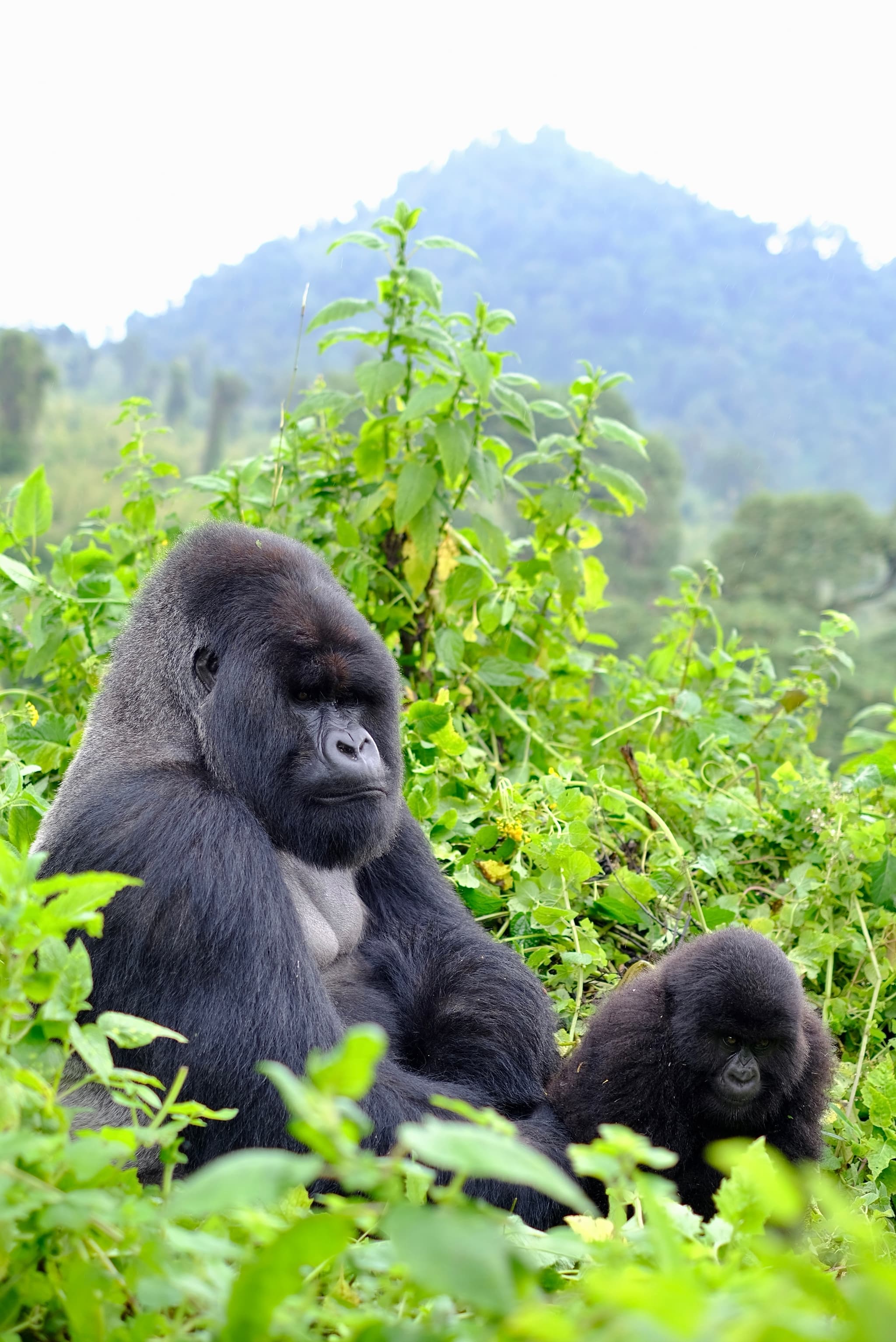
Rwanda — the Land of a Thousand Hills — packs an extraordinary amount into a small, green, mountainous country. The headline is the mountain gorillas of Volcanoes National Park, one of the most moving wildlife encounters on earth, but there is far more: chimpanzees and a swaying canopy walk in Nyungwe Forest, a genuine Big Five safari in Akagera, golden monkeys on the volcano slopes, and the calm shores of Lake Kivu. Kigali, the capital, is famously clean, orderly and safe, and is also home to the deeply affecting Genocide Memorial. English is widely spoken, Australians get a free visa on arrival, and the country is compact enough to see a lot in a week. This guide covers the practical things — money, health, safety, when to go and how to get around — so you can focus on the experience.
At a glance
- Capital
- Kigali
- Currency
- Rwandan Franc (RWF / FRw) · USD widely used
- Languages
- Kinyarwanda, English, French & Swahili · English widely spoken
- Time zone
- CAT (UTC+2) · 8–9 hrs behind Sydney
- Dialling code
- +250
- Electricity
- 230V / 50Hz · plug Type C & J
- Driving
- On the right
- Visa (Australians)
- Free 30-day visa on arrival
Rwanda month by month
🌡 Mild · 16–27°C (Kigali)
💧 Mostly dry
Short dry season — among the best months for gorilla trekking, with firmer trails and clearer skies.
🌡 Mild · 16–28°C
💧 Dry, building late
Warm, dry and excellent for trekking and chimps in Nyungwe before the long rains arrive.
🌡 Mild · 16–27°C
💧 Long rains begin
The long rains set in — lush and green, fewer visitors, but muddier, steeper trekking.
🌡 Mild · 16–26°C
💧 Wettest month
👥 Quietest
Rwanda's wettest month. Forests glow green and lodges are quieter, but expect heavy downpours.
🌡 Mild · 16–26°C
💧 Rains easing
Long rains taper off through the month; landscapes are at their most verdant.
🌡 Mild · 15–27°C
💧 Dry
Start of the long dry season — prime trekking begins, with crisp air and navigable trails.
🌡 Mild · 15–28°C
💧 Dry
👥 Peak
Peak season: drier ground, reliable trekking and the busiest, so book permits well ahead.
🌡 Mild · 15–28°C
💧 Dry
👥 Peak
Continued dry, peak-season conditions — ideal for gorillas, golden monkeys and Akagera safaris.
🌡 Mild · 16–28°C
💧 Dry, building late
Excellent trekking; the annual Kwita Izina gorilla-naming ceremony is usually held this month.
🌡 Mild · 16–27°C
💧 Short rains begin
Short rains arrive — green, atmospheric and quieter than mid-year, with occasional afternoon showers.
🌡 Mild · 16–26°C
💧 Short rains
👥 Quieter
Wettest of the short-rains months; lush scenery and the start of permit discounts in low season.
🌡 Mild · 16–27°C
💧 Drying out
👥 Festive peak
Short dry season returns — good trekking weather, with a festive-season bump in visitors late in the month.
Top experiences
Mountain gorillas, Volcanoes NP
The headline trek
An hour with a habituated gorilla family on the forested slopes of the Virunga volcanoes — limited to eight trekkers per group and the reason most people come to Rwanda.
Golden monkeys
Volcanoes NP
A shorter, easier trek to playful, endangered golden monkeys in the bamboo — a perfect lower-cost companion to the gorillas.
Nyungwe Forest
Chimps & canopy walk
Track chimpanzees and other primates in one of Africa's oldest rainforests, then cross East Africa's only suspended canopy walkway, high above the treetops.
Akagera National Park
Big Five safari
Rwanda's savannah park on the eastern border — lion, leopard, elephant, buffalo and rhino around lakes and rolling plains, a great contrast to the forests.
Kigali Genocide Memorial
History & reflection
A powerful, dignified memorial to the 1994 genocide against the Tutsi — essential to understanding modern Rwanda. Allow a quiet half-day.
Lake Kivu
Lakeside relaxation
One of Africa's Great Lakes — swim, kayak or unwind at Rubavu (Gisenyi), Karongi (Kibuye) or Rusizi after trekking. Bilharzia-free and malaria-aware.
Kigali city
Clean & safe capital
Famously orderly and walkable, with cafés, craft markets, art galleries and a genuinely good food scene — an easy, pleasant start or finish.
Tea & coffee country
Scenic hills
Plantation visits and cuppings showcase Rwanda's prized single-origin coffee and tea, set among the iconic thousand hills.
Getting around
International flights arrive at Kigali International Airport (KGL), a compact, efficient hub served by RwandAir, Qatar Airways, Ethiopian, Kenya Airways and others — most Australians connect via the Gulf or another African city.
- Private transfers with a driver-guide are the norm for tourists and the easiest way to travel; Rwanda's roads are good and well-maintained, but the terrain is steep and winding.
- Distances feel short on the map but take time — Kigali to Volcanoes National Park is around 2.5–3 hours; to Nyungwe in the south-west, roughly 5–6 hours.
- Domestic flights and helicopter transfers can shorten the longer hops (for example to Nyungwe or Akagera) — ask your lodge or agency.
- Driving is on the right. Self-driving is possible but most visitors prefer a local driver given the mountain roads, and you would need an International Driving Permit.
- Note that an International Driving Permit (IDP) must be accompanied by your valid original Australian state/territory driver's licence; carrying an IDP alone is not legally sufficient if pulled over by Rwandan traffic police.
- In Kigali, ride-hailing apps and metered taxis are reliable; moto-taxis (motorbikes) are everywhere but carry more risk.
Money & payments
The currency is the Rwandan Franc (RWF, written FRw).
- US dollars are widely used for tourism — gorilla permits, lodges and many tours are priced in USD. Bring clean, newer notes (2013 series or later); older or torn notes are often refused.
- Cards are accepted in Kigali hotels, better restaurants and larger shops; outside the capital, acceptance thins out.
- ATMs are common in Kigali and major towns — use ones at banks, shield your PIN, and Bank of Kigali and I&M ATMs tend to accept foreign cards.
- Carry some Rwandan Francs in cash for markets, smaller cafés, tips and rural areas.
- Tell your bank you'll be travelling so your cards aren't blocked, and change leftover Francs before you leave — they're hard to exchange overseas.
Gorilla Permit Pricing & Strict Minimum Age Limit
The cost for mountain gorilla permits: US$1,500 per person per trek (issued by the Rwanda Development Board). A 30% discount (down to US$1,050) applies during the low season (Nov–May) if combining the trek with at least two nights in Akagera or Nyungwe National Parks.
The mandatory minimum age limit of 15 years for gorilla trekking in Volcanoes National Park; children under 15 are strictly barred from participating.
Health before you go
See your GP or a travel clinic about 6–8 weeks before you leave.
- Malaria — present throughout Rwanda year-round, including lower-lying areas and Akagera; risk is lower at Kigali's and Volcanoes' higher altitudes but precautions still apply. Take anti-malarial medication and prevent bites with repellent, long sleeves and covered ankles at dusk.
- Yellow fever — Rwanda is not a yellow-fever-risk country, but you must show a vaccination certificate if you arrive from, or have transited, a country with yellow-fever risk (relevant on multi-country African trips). It's also required for the East Africa Tourist Visa. Under standard international health regulations and Rwandan border control, proof of vaccination is required only if arriving from an endemic area or if you have transited for more than 12 hours through an airport in a yellow-fever-risk country (e.g. transiting via Addis Ababa on Ethiopian Airlines or Nairobi on Kenya Airways).
- Other vaccines — make sure routine vaccinations are current; many travellers also add hepatitis A and typhoid, and your doctor may discuss others. Carry any personal medication in its original packaging.
- Water — drink bottled or filtered water; avoid tap water.
Insurance: medical facilities are limited and there is no reciprocal healthcare agreement — serious cases are often evacuated by air to Nairobi. Comprehensive travel insurance that covers medical evacuation is essential.
Staying safe
Rwanda is one of the safest countries in Africa for visitors, and Kigali is notably clean, orderly and low-crime. Most trips are trouble-free with sensible precautions.
- In cities — watch for petty theft (pickpocketing, bag-snatching) in busy areas and markets, keep valuables out of sight and use a hotel safe.
- Borders — avoid the area near the DRC border in the north-west, which can close at short notice; check Smartraveller before travelling there.
- Rules to respect — it's illegal to photograph government buildings, military sites and the airport, and single-use plastic bags are banned (see below).
- On the road — avoid driving at night outside towns, and treat moto-taxis with caution.
Emergencies: 112 (police / all emergencies), 912 (ambulance), 111 (fire). Save your lodge's number and the Australian High Commission details below.
Language, people & customs
Rwanda has four official languages — Kinyarwanda (spoken by nearly everyone), English, French and Swahili. English is used in business, education and tourism, so you'll get by easily, and a few words of Kinyarwanda ("muraho" for hello, "murakoze" for thank you) are always welcomed.
Rwandans are reserved, polite and proud of their country's recovery and order. Dress is fairly modest and neat; smart-casual is fine for restaurants and neutral colours suit trekking. Always ask before photographing people, and never photograph government, military or airport buildings.
Plastic-bag ban: Rwanda has banned single-use plastic bags and most single-use plastics for years — it's a big part of why the country is so clean. Plastic bags can be confiscated on arrival, so remove them from your luggage and pack toiletries and shoes in reusable or fabric bags instead.
The last Saturday of each month is Umuganda, a national community clean-up morning when many shops and services close until around midday — plan around it.
Staying connected
- Mobile coverage (4G) is good in Kigali and the main towns, and reaches many trekking gateways.
- Wi-Fi — most hotels and lodges offer it, though it can be slow or limited to common areas in remote forest lodges (a welcome chance to switch off).
- SIMs & eSIMs — inexpensive prepaid local SIMs (MTN, Airtel) are easy to buy with your passport, and eSIMs are a convenient alternative if your phone supports them.
- Power is generally reliable in cities; remote lodges may run on generators or solar, so charge devices when you can and bring a power bank for long trekking days.
Emergency & embassy contacts
Australian High Commission, Nairobi
+254 20 427 7100
Accredited to Rwanda. Limuru Road, Rosslyn, Nairobi, Kenya. Open Mon–Fri. Consular: consular.nairobi@dfat.gov.au
Consular emergencies (after hours)
+61 2 6261 3305
DFAT's 24-hour Consular Emergency Centre in Canberra, for Australians needing urgent help.
Local emergencies
112 · 912 · 111
Police / all emergencies 112, ambulance 912, fire 111. Save your lodge's number too.
Canadian High Commission, Kigali (Consular Assistance for Australians)
+250 252 554 800 / kgali@international.gc.ca
Role: Provides limited in-person emergency consular assistance to Australian citizens under the Canada-Australia Consular Services Sharing Arrangement (does not issue Australian passports or notarial services; full services remain with the High Commission in Nairobi).
Address: #59 KN 16 Avenue (Kiyovu), Kigali, Rwanda
Starter packing list
Gorilla & forest trekking
- Sturdy, broken-in waterproof hiking boots: trails are steep, muddy and uneven
- Lightweight long-sleeve shirt & long trousers: protects from nettles, insects and sun
- Gardening or thick gloves: for gripping stinging vegetation on the climb
- Waterproof rain jacket & gaiters
- Daypack with rain cover & refillable water bottle
- Insect repellent & high-SPF sunscreen
- Neutral-coloured clothing: avoid bright colours in the forest
General
- Binoculars & camera (no flash near wildlife)
- Warm fleece or layer: mornings at altitude are cool
- Swimwear: for Lake Kivu
- Reusable fabric bags: plastic bags are banned and may be confiscated
Health & documents
- Passport: valid 6+ months with blank pages
- Travel insurance details: must cover medical evacuation
- Anti-malarials & personal medication: in original packaging
- Yellow-fever certificate: if arriving via a risk country or using the East Africa visa
- Gorilla permit confirmation & copies of key documents
Practical
- Type C / J or universal adapter
- Power bank
- Clean USD notes (2013 series or newer) plus some Francs
- Phone with offline maps
Frequently asked
Do Australians need a visa for Rwanda?
Australians receive a fee-waived 30-day visa on arrival. Rwanda's East Africa Tourist Visa can cover Rwanda, Uganda and Kenya when Rwanda is the first entry and issuing country. If Kenya is first, Kenya currently requires its standard eTA and marks the regional eTA product ‘coming soon’. Confirm the complete route before applying.
How much does a gorilla permit cost?
A Rwanda gorilla trekking permit costs US$1,500 per person for one trek, issued by the Rwanda Development Board. It includes park entry, guides and trackers, and one hour with a gorilla family. Permits are limited and sell out, so book several months ahead through a licensed operator. Discounts can apply in the low season (Nov–May) with qualifying stays.
Do I need malaria tablets?
Yes — malaria is present throughout Rwanda all year, so anti-malarial medication is recommended even though risk is lower at higher altitudes like Kigali and Volcanoes National Park. See your doctor 6–8 weeks before departure and prevent bites with repellent and covered skin at dusk.
Is Rwanda safe for tourists?
Yes — Rwanda is one of Africa's safest destinations and Kigali is famously clean and orderly. Take normal precautions against petty theft, avoid the DRC border area in the north-west, and don't photograph government, military or airport buildings.
When is the best time to visit?
The dry seasons are best for trekking — the long dry season June–September and the short dry season December–February offer firmer trails and clearer skies. The wetter months (March–May and October–November) are lush and quieter, with muddier, steeper trekking.
Can I bring plastic bags into Rwanda?
No. Rwanda bans single-use plastic bags, and they may be confiscated on arrival. Remove them from your luggage before you fly and use reusable or fabric bags for toiletries and shoes instead.
Should I pay in Rwandan Francs or US dollars?
Both are useful. Tourism services — permits, lodges, tours — are often priced in USD, so bring clean notes from 2013 or later. Carry Rwandan Francs in cash for markets, small cafés, tips and rural areas, and use cards in Kigali.
Sources & last verified
Last verified: 16 July 2026. Confirm visa, health and safety requirements immediately before travel.
Key sources:
- Rwanda Immigration — migration.gov.rw
- Kenya eTA eligibility — etakenya.go.ke
- Smartraveller, Rwanda — smartraveller.gov.au