country· 12 min read· Explore Africa editorial · Published June 2026 · Updated 30 Oct 2026
Seychelles: granite islands, white sand & turquoise
Everything Australians need to plan a Seychelles trip — the Travel Authorisation, money, when to go, getting between the islands, and health. A malaria-free Indian Ocean paradise of beaches, granite boulders and island-hopping.
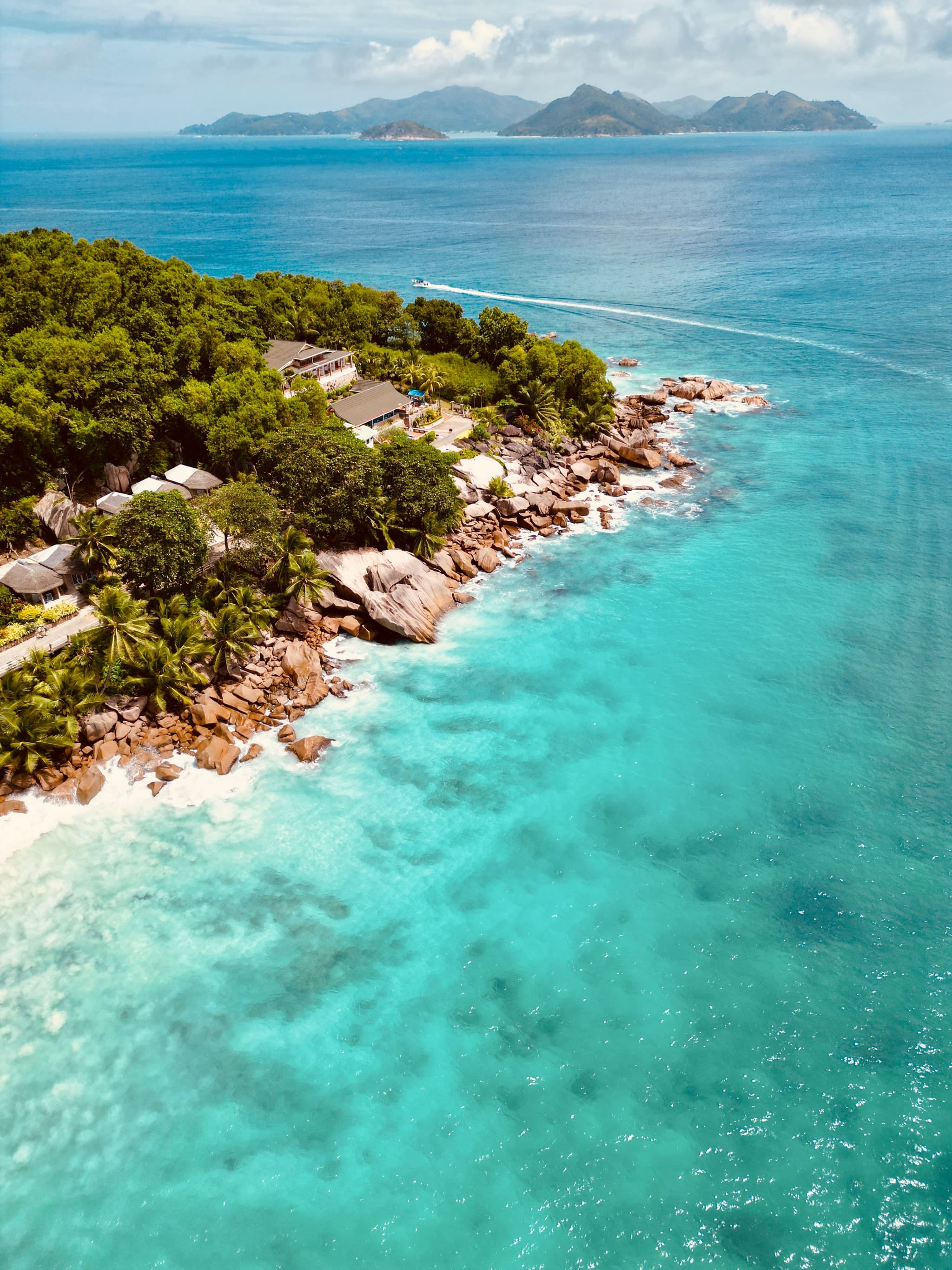
The Seychelles is the Indian Ocean at its most idyllic — 115 granite and coral islands scattered north-east of Madagascar, where powder-white beaches curve between sculpted granite boulders and the water glows turquoise. This is a beach-and-island escape rather than a safari country: think snorkelling over coral, island-hopping by fast ferry, the rare coco de mer palms of Praslin's Vallée de Mai, and giant tortoises ambling across La Digue. It's English-speaking, malaria-free and famously safe. Australians don't need a visa, but everyone must hold an electronic Travel Authorisation before they fly. This guide covers the practical things — money, health, safety, when to go and how to get around — so all that's left to plan is which beach comes first.
At a glance
- Capital
- Victoria (on Mahé)
- Currency
- Seychellois Rupee (SCR / SR)
- Languages
- Seychellois Creole, English & French (all official)
- Time zone
- SCT (UTC+4) · ~6 - 7 (Australian daylight saving time) hrs behind Sydney
- Dialling code
- +248
- Electricity
- 240V / 50Hz · plug Type G (UK-style)
- Driving
- On the left
- Entry (Australians)
- No visa, but a Travel Authorisation is required before you fly
Seychelles month by month
🌡 Warm · 27–31°C
💧 Heavy (wettest months)
Northwest monsoon: hot, humid and the rainiest time, though the islands are lush and the sea is calm and warm. Showers are often short and tropical.
🌡 Warm · 27–31°C
💧 High
Still warm and wet with light winds. Greenest scenery, occasional downpours, and good underwater visibility between showers.
🌡 Warm · 27–31°C
💧 Easing
Rains begin to taper as the northwest monsoon winds down. Warm, calm seas — pleasant for swimming and snorkelling.
🌡 Warm · 27–31°C
💧 Low
👥 Popular
A transition month and a sweet spot — the calmest, warmest period as the winds change direction. Glassy seas and superb diving and snorkelling.
🌡 Warm · 26–30°C
💧 Low
The drier southeast trade winds set in — cooler, fresher and less humid. Excellent all-round weather and great visibility underwater.
🌡 Mild–warm · 26–29°C
💧 Low
Cooler, breezier and dry. Comfortable days; the southeast wind picks up, so sheltered northwest-facing beaches are calmest.
🌡 Mild–warm · 25–29°C
💧 Lowest
👥 AUS school holidays
Peak dry season — driest and windiest. Brilliant for sailing and exploring; some seaweed can wash up on windward (east-facing) beaches.
🌡 Mild–warm · 25–29°C
💧 Low
Cool, dry and breezy. The southeast trades keep it fresh; great hiking and island-hopping weather.
🌡 Warm · 26–30°C
💧 Low
Winds begin to ease as the dry season fades. Warm, settled and a lovely time to visit before the crowds of late year.
🌡 Warm · 27–30°C
💧 Building
👥 Popular
Another calm, warm transition month — among the best for diving and snorkelling, with light winds and clear water.
🌡 Warm · 27–31°C
💧 Building
Warm and increasingly calm before the wetter season. Good underwater visibility and gentle seas.
🌡 Warm · 27–31°C
💧 High (rains return)
👥 Festive peak
Northwest monsoon returns — hot, humid and wetter, but lush and calm-seas. Festive-season prices and demand are high.
Top experiences
Mahé
The main island
Home to Victoria (one of the world's smallest capitals), Beau Vallon beach, mountain trails in Morne Seychellois National Park, and most international arrivals.
Praslin & the Vallée de Mai
UNESCO palm forest
A primeval palm forest and the only place the giant coco de mer nut grows wild — plus Anse Lazio, regularly rated among the world's most beautiful beaches.
La Digue & Anse Source d'Argent
Iconic beach
Sculpted pink-granite boulders, shallow turquoise water and a slow, bicycle-paced island life — the postcard image of the Seychelles.
Island-hopping
Mahé · Praslin · La Digue
Fast catamaran ferries and short domestic flights link the three main islands, making a multi-island itinerary easy.
Diving & snorkelling
Coral & granite reefs
Warm, clear water with reef fish, turtles, rays and whale sharks (seasonal). April–May and October–November offer the calmest, clearest conditions.
Giant tortoises
Aldabra giants
Meet free-roaming Aldabra giant tortoises on Curieuse Island and elsewhere — some over a century old.
Outer & private islands
Aldabra & beyond
Remote coral atolls and exclusive private-island resorts — the UNESCO-listed Aldabra Atoll is one of the planet's great untouched wildlife sanctuaries.
Marine national parks
Ste Anne & Curieuse
Protected marine parks just offshore from Mahé and Praslin — superb for a day of snorkelling, glass-bottom boats and picnic beaches.
Getting around
International flights land at Seychelles International Airport on Mahé, near Victoria.
- Inter-island ferries are the backbone of travel. The Cat Cocos high-speed catamarans link Mahé to Praslin (about 1 hr 15 min) and on to La Digue (around 1 hr 45 min via Praslin); the Cat Rose shuttles the short Praslin–La Digue hop. Book ahead in peak season.
- Domestic flights with Air Seychelles connect Mahé and Praslin in about 15 minutes on small Twin Otter aircraft — quick, scenic and frequent. Luggage limits are tighter than on international flights, so check your allowance.
- On La Digue, life moves by bicycle and the occasional electric buggy — hire a bike and explore at island pace.
- Car hire & taxis — self-drive is easy on Mahé and Praslin (a valid foreign licence is fine; driving is on the left). Roads are narrow and winding, so take it slowly. Taxis and a cheap public bus network also serve both islands.
- Private-island resorts arrange their own boat or light-aircraft transfers as part of your stay.
Money & payments
The currency is the Seychellois Rupee (SCR, written SR).
- Cards — Visa and Mastercard are widely accepted at resorts, hotels, restaurants and larger shops, and contactless is increasingly common. American Express is mostly limited to high-end hotels.
- Cash — carry some rupees for local markets, smaller islands, bus fares, tips and casual cafés, where cards may not be taken.
- Euros & US dollars are quoted and accepted by many hotels, car-hire firms and excursions, but you'll usually get better value paying in rupees for everyday spending.
- ATMs are available at the airport and in the main hubs of Mahé, Praslin and La Digue, and dispense rupees (withdrawal fees apply).
- Tell your bank you'll be travelling so your cards aren't blocked.
- Mandatory Hotel Tax: Accommodation providers in Seychelles are legally required to collect a per-person, per-night green levy upon check-in/check-out:
Medium accommodations (25–50 rooms): SCR 75 per person/night
Large accommodations (51+ rooms), island resorts & yachts: SCR 100 per person/night
Small establishments (1–24 rooms): Exempt
Children aged 12 and under are exempt.
Health before you go
Good news first: the Seychelles is malaria-free — no anti-malarials needed for the islands themselves. Still, see your GP or a travel clinic about 6–8 weeks before you leave.
- Mosquito-borne illness — although there's no malaria, dengue and chikungunya can occur (a chikungunya outbreak was reported in early 2026), so prevent bites: use repellent, especially around dawn and dusk, and cover up when needed.
- Yellow fever — none in the Seychelles, but you must show a vaccination certificate if you arrive from, or have transited over 12 hours through, a yellow-fever-risk country — relevant if you're combining the islands with an East or Central African safari.
- Routine vaccines — make sure these are up to date; many travellers also discuss hepatitis A and typhoid with their doctor.
- Water — stick to bottled or filtered water for drinking; your hotel will advise.
- Sun & sea — the equatorial sun is intense and currents can be strong on exposed beaches (see the warning below).
Insurance: medical facilities are limited, especially on the smaller islands, and serious cases may need evacuation to Mauritius, Réunion or further afield — so comprehensive travel insurance that covers medical evacuation is essential.
Staying safe
The Seychelles is one of the safer destinations in the region, and the vast majority of visits are trouble-free. Smartraveller advises Australians to exercise normal safety precautions — the same common sense you'd use anywhere.
- Petty theft — opportunistic theft can happen; don't leave valuables unattended on the beach or visible in a parked car, and use your accommodation's safe.
- Beaches & water — respect currents, surf and tides, and heed local warnings (see above).
- Natural hazards — heavy rain during the wet season (roughly December–March) can cause localised flooding and landslips.
Emergencies: dial 999 for police (or the 133 police hotline) and 151 for an ambulance/medical emergencies. Save your hotel's number and the Australian High Commission details below.
Language, people & customs
The Seychelles has three official languages — Seychellois Creole (Kreol), English and French. English is widely spoken and used in business, signage and tourism, so Australians get by easily everywhere.
Seychellois culture is a warm, relaxed blend of African, French, Indian and Chinese influences. Dress is casual and beachy, though it's polite to cover up away from the sand — in Victoria, in shops and at churches. A friendly greeting goes a long way, and it's courteous to ask before photographing people. The islands take their pristine environment seriously: don't touch or stand on coral, never remove shells, coral or a coco de mer nut without the proper permit, and follow marine-park rules.
Staying connected
- Mobile coverage (4G) is good across the main islands of Mahé, Praslin and La Digue, with patchier service on remote outer islands.
- Wi-Fi — most hotels and resorts offer it, though it can be slower or limited on smaller and private islands (a fine excuse to switch off).
- SIMs & eSIMs — local prepaid SIMs from Cable & Wireless or Airtel are inexpensive and sold at the airport (bring your passport); a travel eSIM set up before you fly is a convenient alternative.
Emergency & embassy contacts
Australian High Commission, Port Louis (Mauritius)
+230 202 0160
Accredited to the Seychelles. 2nd Floor, Rogers House, 5 President John Kennedy Street, Port Louis, Mauritius. Email: ahc.portlouis@dfat.gov.au
Consular emergencies (after hours)
+61 2 6261 3305
DFAT's 24-hour Consular Emergency Centre in Canberra, for Australians needing urgent help overseas.
Police / Ambulance
999 / 151
Police hotline also 133. Save your hotel's number too.
Starter packing list
Beach & water
- Swimwear (a couple of sets)
- Snorkel & mask: handy, though resorts and dive shops also hire gear
- Rash vest / sun shirt: the best protection against the equatorial sun
- Reef-safe sunscreen: protects the coral as well as you
- Reef shoes or sandals: for rocky entries and boat decks
- Dry bag: for boat trips and island-hopping
Clothing
- Light, breathable clothing
- A light cover-up for town & churches
- Wide-brim hat & sunglasses
- A light rain jacket: especially in the Dec–Mar wet season
- One smart-casual outfit for dining
Health & documents
- Passport: valid for your stay; check airline requirements
- Travel Authorisation confirmation: applied for before you fly
- Travel insurance details: must cover medical evacuation
- Insect repellent: dengue/chikungunya can occur
- Personal medication: check it's legal to bring in
- Copies of key documents
Practical
- Universal / Type-G adapter
- Power bank
- Some rupees in cash: for markets, buses and tips
- Phone with offline maps
- Refillable water bottle
Frequently asked
Do Australians need a visa for the Seychelles?
No visa is required for tourism — you're given a free visitor's permit on arrival for an initial stay of up to three months. But everyone must apply online for a Travel Authorisation before flying (at the official seychelles.govtas.com or the Seychelles E-Border app), which carries a small fee. Apply a few days ahead and confirm the current rules on Smartraveller before you go.
Is the Seychelles malaria-free?
Yes — the Seychelles is malaria-free, so you don't need anti-malarial tablets for the islands. There's still some risk of mosquito-borne dengue and chikungunya, so pack repellent and prevent bites. See your doctor before travelling, especially if you're combining the trip with a mainland safari.
When is the best time to go?
The calmest, clearest conditions for beaches, diving and snorkelling are in the transition months of April–May and October–November. The cooler, drier southeast season (May–September) is breezy and great for sailing and walking; the warmer northwest season (December–March) is lusher but wetter, with calm seas.
How do I get between the islands?
Fast Cat Cocos catamaran ferries link Mahé, Praslin and La Digue, and Air Seychelles flies Mahé–Praslin in about 15 minutes. On La Digue, get around by bicycle. Book ferries and flights ahead in peak season.
Can I drink the tap water?
Stick to bottled or filtered water for drinking to be safe — your hotel will advise. Tap water is fine for brushing teeth and showering.
What currency should I use, and are cards accepted?
The local currency is the Seychellois Rupee. Cards (Visa and Mastercard) are widely accepted at resorts and larger businesses, and euros and US dollars are often accepted too — but carry some rupees for markets, buses, smaller islands and tips, where they give the best value.
Is the Seychelles safe?
Yes — it's one of the safer destinations in the region, and Smartraveller advises normal safety precautions. Watch out for opportunistic theft (use the hotel safe), and respect ocean currents and surf, which change with the monsoon seasons.
Sources & last verified
Last verified: 29 June 2026. This guide is researched from official and authoritative sources and reviewed by Explore Africa. Visa, health and safety rules can change — always confirm the current advice before you travel.
Key sources:
- Smartraveller (Australian Government): smartraveller.gov.au/destinations/africa/seychelles
- Seychelles Electronic Border System (Travel Authorisation): seychelles.govtas.com
- Seychelles Ministry of Foreign Affairs & the Diaspora: mfa.gov.sc
- Seychelles Department of Immigration & Civil Status: ics.gov.sc
- US CDC Travelers' Health: wwwnc.cdc.gov/travel/destinations/traveler/none/seychelles
- Australian High Commission, Mauritius (accredited to the Seychelles): mauritius.embassy.gov.au