country· 11 min read· Explore Africa editorial · Published August 2026 · Updated 30 Oct 2026
South Africa: Big Five, Cape Town & the open road
Everything an Australian traveller needs for South Africa — visas, money, malaria, safety, the climate month by month, tipping and the experiences not to miss. Researched, cited and reviewed.
South Africa is the great all-rounder of African travel — and the easiest place for Australians to begin. In a single trip you can track the Big Five in the Greater Kruger, sip among the oak-lined estates of the Winelands, ride the cableway up Table Mountain and watch whales calve off a clifftop near Hermanus. It is well set up for visitors, English is spoken everywhere, and Australians don't need a visa for a holiday. This guide covers the practical things — money, health, safety, when to go and how to get around — so the only thing left to plan is what to see.
At a glance
- Capitals
- Pretoria · Cape Town · Bloemfontein
- Currency
- South African Rand (ZAR / R)
- Languages
- 12 official · English widely spoken
- Time zone
- SAST (UTC+2) · 8–9 hrs behind Sydney
- Dialling code
- +27
- Electricity
- 230V / 50Hz · plug Type M (also C/N)
- Driving
- On the left
- Visa (Australians)
- Visa-free up to 90 days (tourism)
South Africa month by month
🌡 Hot · 30–33°C north
💧 Summer storms (north)
👥 Cape peak
Lush bush, newborn animals and superb birding in Kruger, but hot and humid. Cape Town is at its sunny best — and busiest.
🌡 Hot · 30–33°C
💧 Afternoon storms (north)
Hot, green bushveld; glorious beach and wine weather in the Cape.
🌡 Warm · 28–30°C
💧 Easing (north)
Rains tapering in the north; harvest time in the Winelands.
🌡 Mild · 25–28°C
💧 Low
A lovely all-rounder — mild days, thinning crowds, the bush still green.
🌡 Mild · 23–26°C
💧 Dry (north) · Cape rains begin
Start of prime safari: cooler, drier, thinning bush. The Cape's wet winter begins.
🌡 Cool · 8–24°C
💧 Dry (north) · wet Cape
Excellent game viewing; cold, crisp mornings on game drives. Cape Town wet and green.
🌡 Cool · 7–23°C
💧 Dry (north) · wet Cape
👥 AUS school holidays
Peak dry-season wildlife — pack warm layers for dawn drives. Whale season opens on the Cape coast.
🌡 Cool–mild · 9–26°C
💧 Dry (north)
Top game viewing; whales off Hermanus. Dry, dusty, easy to spot wildlife.
🌡 Warming · 12–29°C
💧 Dry
👥 Spring
Arguably the best month — superb wildlife, Namaqualand wildflowers, warming days.
🌡 Hot · 16–31°C
💧 Building (north)
Hot and dry with fantastic game viewing before the rains; humidity builds. Cape spring.
🌡 Warm · 17–30°C
💧 First rains (north)
First rains green the bush — great birding, newborns and fewer crowds.
🌡 Hot · 18–31°C
💧 Summer storms (north)
👥 Coast peak
Hot summer; festive-season crowds and higher prices on the coast and in Cape Town.
Top experiences
Kruger & the Greater Kruger
Big Five safari
World-class game viewing, from affordable self-drive public camps to the ultra-luxury private reserves of the Sabi Sand, Timbavati and Manyeleti.
Cape Town & Table Mountain
Iconic city
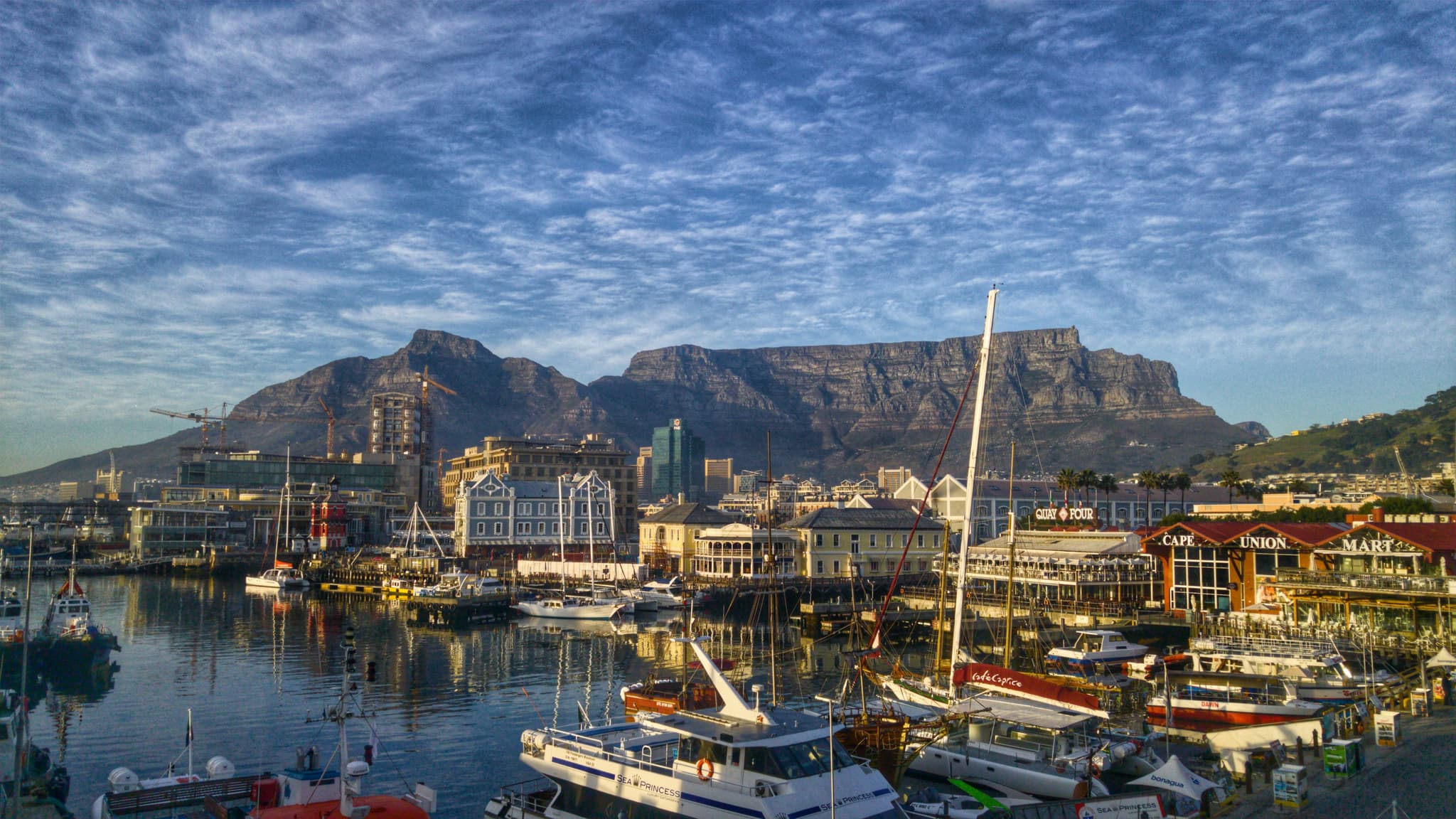
The cableway up Table Mountain, the V&A Waterfront, colourful Bo-Kaap and Camps Bay beaches — against a backdrop few cities can match.
The Cape Winelands
Stellenbosch & Franschhoek
Cellar-door tastings, Cape Dutch estates and some of the world's great food, under an hour from Cape Town.
The Garden Route
Coastal road trip
Knysna, Plettenberg Bay and the Tsitsikamma — forests, lagoons and beaches strung along the southern coast.
Cape Peninsula
Day trip
Chapman's Peak Drive, the Boulders Beach penguins and the wild Cape of Good Hope.
Whale Coast — Hermanus
Jun–Nov
Some of the best land-based whale watching on earth as southern right whales calve close to shore.
Panorama Route & Blyde River Canyon
Mpumalanga
Dramatic escarpment views — God's Window, Bourke's Luck Potholes — on the scenic road to Kruger.
Robben Island
Heritage
The prison where Nelson Mandela was held — a moving half-day trip from the V&A Waterfront.
KwaZulu-Natal — bush & beach
Hluhluwe & iSimangaliso
Big Five in Hluhluwe-iMfolozi plus wetlands, turtles and warm Indian Ocean beaches.
The Drakensberg
Mountains
Hiking, ancient San rock art and cool highland air in a UNESCO World Heritage range.
Johannesburg & Soweto
City & history
The Apartheid Museum, Constitution Hill and a Soweto tour — and the main gateway for Kruger safaris.
Getting around
International flights arrive at OR Tambo (Johannesburg) and Cape Town International. Johannesburg is the main hub for Kruger safaris.
- Domestic flights are frequent and good value — Airlink, FlySafair, CemAir and SAA connect the major cities and safari gateways, and save a lot of time on the country's long distances.
- Light-aircraft transfers serve the private reserves: usually soft-sided bags only, with a strict luggage limit of around 15–20 kg including hand luggage — check with your lodge before you pack.
- Self-drive is popular and rewarding — the Garden Route, the Winelands and Kruger's public rest camps are all classic drives. Driving is on the left and roads are generally good.
- In the cities, use Uber or Bolt rather than hailing taxis on the street.
Money & payments
The currency is the South African Rand (ZAR, written R).
- Cards — including contactless and mobile wallets — are accepted almost everywhere.
- ATMs are common; use ones inside shopping malls or banks, shield your PIN, and decline help from strangers.
- Carry some cash for tips, markets, rural areas, park gates and the occasional cash-only petrol station.
- Tell your bank you'll be travelling so your cards aren't blocked.
VAT refund: tourists can claim back the 15% VAT on goods they take home — keep your tax invoices and claim at the refund desk at the airport on departure.
Health before you go
See your GP or a travel clinic about 6–8 weeks before you leave.
- Malaria — present in the Kruger/Lowveld and far north-east (eastern Mpumalanga, northern Limpopo, northern KwaZulu-Natal). Take anti-malarial medication (risk is highest September–May) and prevent bites with repellent and long sleeves at dusk. Cape Town, the Garden Route and the Winelands are malaria-free.
- Yellow fever — none in South Africa, but you must show a vaccination certificate if you arrive from or transit a yellow-fever-risk country (parts of East and Central Africa) — relevant on multi-country safaris. Yellow Fever certificate is only required if transiting for more than 12 hours through an airport in a Yellow Fever endemic country (e.g., transit via Addis Ababa / Nairobi on Ethiopian or Kenya Airways).
- Other vaccines — make sure routine vaccinations are current; many travellers also add hepatitis A and typhoid. Ask your doctor.
- Water — tap water is safe to drink in cities and towns.
Insurance: private hospitals in the major cities are excellent but expensive, so comprehensive travel insurance that covers medical evacuation is essential.
Staying safe
South Africa has high crime in parts of the country, but the great majority of visits are trouble-free with sensible precautions.
- In cities — keep valuables out of sight, don't walk alone after dark, use Uber or Bolt at night, and use ATMs inside malls or banks.
- Safari areas — lodges, private reserves and the main tourist areas are very safe.
- On the road — keep doors locked and windows up at city intersections, don't leave bags visible, and avoid driving at night in rural areas (livestock and pedestrians).
Emergencies: 10111 (police), 10177 (ambulance), or 112 from any mobile. Save your lodge's number and the Australian High Commission details below.
Language, people & customs
South Africa has 12 official languages — among them isiZulu, isiXhosa, Afrikaans and English, and since 2023 South African Sign Language. English is the language of business, signage and tourism, so you'll get by easily everywhere.
South Africans are warm and informal; a friendly greeting goes a long way. Dress is generally casual — smart-casual for upmarket restaurants, neutral colours on safari, and modest cover at religious or rural sites. Tipping is part of everyday life (see above). Always ask before photographing people.
Staying connected
- Mobile coverage (4G/5G) is good in cities and towns.
- Wi-Fi — most lodges have it, though it can be slow or limited to common areas (a welcome chance to switch off).
- SIMs & eSIMs — prepaid local SIMs (Vodacom, MTN) and eSIMs are inexpensive; a physical SIM needs RICA registration, so bring your passport and a proof of address (your hotel booking works).
- Load-shedding (scheduled power cuts) has eased but can still happen; good hotels and lodges run on backup power or solar.
Starter packing list
Safari
- Neutral, layerable clothing: khaki, olive, beige — avoid bright colours and black/dark blue
- Warm fleece & beanie: winter mornings are cold on open game drives
- Wide-brim hat & sunglasses
- Binoculars
- High-SPF sunscreen & insect repellent: DEET-based for malaria areas
- Soft-sided duffel: required for light-aircraft transfers
Cities & coast
- A smart-casual outfit for dining
- Swimwear
- Comfortable walking shoes
- Light rain jacket: Cape Town winter, May–Aug
Health & documents
- Passport: valid 30+ days beyond departure, 2 blank pages
- Travel insurance details: must cover medical evacuation
- Anti-malarials & personal medication
- Yellow-fever certificate: only if arriving via a risk country
- Copies of key documents
Practical
- Universal / Type-M adapter
- Power bank
- Some Rand in cash: for tips and rural areas
- Phone with offline maps
Emergency & embassy contacts
Australian High Commission, Pretoria
+27 12 423 6000
292 Orient Street, Arcadia, Pretoria 0083. Open Mon–Fri, 08:00–16:10.
Consular emergencies (after hours)
+61 2 6261 3305
DFAT's 24-hour Consular Emergency Centre in Canberra, for Australians needing urgent help.
Police / Ambulance
10111 / 10177
Dial 112 from any mobile for emergencies. Save your lodge's number too.
Frequently asked
Do Australians need a visa for South Africa?
No — Australian passport holders can visit for tourism for up to 90 days without a visa. Make sure your passport is valid for at least 30 days beyond departure with two blank pages, and confirm the current rules on Smartraveller before you fly.
Is South Africa safe for tourists?
Yes, with common sense. Most visits are trouble-free. Crime is higher in the cities, so keep valuables hidden, use Uber or Bolt at night and stick to busy areas. Safari lodges and reserves are very safe.
Do I need malaria tablets?
Only for the malaria areas — the Kruger/Lowveld and the far north-east. Cape Town, the Garden Route and the Winelands are malaria-free. See your doctor 6–8 weeks before for advice.
Can I drink the tap water?
Yes, tap water is safe in cities and towns. In remote areas, bottled or filtered water is the safe choice — your lodge will advise.
When is the best time to go?
For safari, the dry winter (May–September) is prime — wildlife gathers at water and the bush is thin. For Cape Town and the coast, the warm, dry summer (November–March) is glorious. Many trips combine both.
Should I pay in Rand or Australian dollars?
Pay in South African Rand. Cards are widely accepted; carry some cash for tips, markets and rural areas. You can also claim back the 15% VAT on goods you take home — keep your tax invoices for the airport refund desk.
Can I self-drive?
Absolutely — the Garden Route, the Winelands and Kruger's public camps are popular self-drives on good roads (remember to drive on the left). For private reserves and long hops, domestic and light-aircraft flights save time.
Sources & last verified
Last verified: 26 August 2026. This guide is researched from official and authoritative sources and reviewed by Explore Africa. Visa, health and safety rules can change — always confirm the current advice before you travel.
Key sources:
- Smartraveller (Australian Government): smartraveller.gov.au/destinations/africa/south-africa
- South African High Commission, Canberra: dirco.gov.za/canberra
- South African Tourism: www.southafrica.net
- US CDC Travellers' Health: wwwnc.cdc.gov/travel
- Australian High Commission, Pretoria: southafrica.embassy.gov.au
- BSG Lawyers - www.bsglawyers.com.au/travel-to-south-africa-with-kids
- South Africa Government - www.gov.za/news/media-statements/home-affairs-requirements-children-travelling-through-south-african-ports (Paragraph 1.1 and 1.2)