country· 15 min read· Explore Africa editorial · Published June 2026 · Updated 30 Oct 2026
Uganda: gorillas, chimps & the source of the Nile
The Pearl of Africa, on foot among mountain gorillas. Our practical guide for Australian travellers — e-visa and the mandatory yellow-fever rule, gorilla and chimp permits, money, malaria, when to go and how to get around.
Uganda is East Africa's great primate country — the place Australians come to stand a few metres from a mountain gorilla in the misty Bwindi Impenetrable Forest, or to track wild chimpanzees through Kibale. Beyond the apes it is astonishingly varied for a country its size: tree-climbing lions in the Ishasha sector of Queen Elizabeth National Park, the thundering Nile squeezed through a 7-metre gap at Murchison Falls, white-water rafting at the river's source in Jinja, and some of the richest birdlife on the continent. It is a more adventurous, less polished destination than southern Africa, so the planning matters more. This guide covers the practical things — the e-visa, the mandatory yellow-fever certificate, permits, money, health, safety and when to go — so you can travel well-prepared.
At a glance
- Capital
- Kampala
- Currency
- Ugandan Shilling (UGX) · USD widely used
- Languages
- English & Swahili (official) · Luganda widely spoken
- Time zone
- EAT (UTC+3) · 7–8 hrs behind Sydney
- Dialling code
- +256
- Electricity
- 240V / 50Hz · plug Type G
- Driving
- On the left
- Visa (Australians)
- e-Visa required — apply online before you fly
Uganda month by month
🌡 Warm · 17–28°C (cooler in the highlands)
💧 Low
👥 Peak
Short dry season — firm forest trails make this one of the best windows for gorilla and chimp trekking. Warm and pleasant; book permits well ahead.
🌡 Warm · 18–29°C
💧 Low
The driest, warmest stretch in the north and at Murchison Falls. Excellent trekking and game viewing; dusty roads.
🌡 Warm · 17–28°C
💧 Building late month
The long rains begin towards month's end. Still good early on; landscapes greening up and fewer visitors.
🌡 Warm · 16–27°C
💧 High — peak long rains
👥 Low (permit discount)
Wettest month in the south; forest trails are muddy and steep, but the bush is lush and lodges quieter. UWA offers discounted low-season permits.
🌡 Warm · 16–27°C
💧 High, easing late
👥 Low (permit discount)
Long rains taper towards month's end. Green, birdy and good value, with discounted low-season permits.
🌡 Mild–warm · 16–27°C
💧 Low
The long dry season begins — drier trails and prime gorilla trekking returns. Cool, crisp mornings in the highlands.
🌡 Mild–warm · 16–27°C
💧 Low
👥 Peak (AUS school holidays)
Prime trekking and safari weather; firm trails. The busiest window — secure permits and lodges early.
🌡 Mild–warm · 16–28°C
💧 Low
👥 Peak
Continued dry conditions and excellent primate trekking. Generally considered the best month for the Bwindi hike.
🌡 Warm · 17–28°C
💧 Building late month
Short rains start towards month's end. Good early-month trekking; greening landscapes and thinning crowds.
🌡 Warm · 16–27°C
💧 Moderate–high
Short rains — often afternoon showers rather than all-day rain. Lush, fewer visitors; trails can be slippery.
🌡 Warm · 16–27°C
💧 Easing
👥 Low (permit discount)
Short rains taper off. Quiet and green with discounted low-season permits — a good-value shoulder month.
🌡 Warm · 17–28°C
💧 Low
👥 Peak late month
The short dry season returns — good trekking and festive-season demand. Book the Christmas–New Year period well in advance.
Top experiences
Mountain gorillas, Bwindi
The headline
An hour with a habituated gorilla family in the Bwindi Impenetrable Forest — roughly half the world's mountain gorillas live here. A permit is required (around USD 800; see the FAQ).
discounted rates introduced for low season (April, May, November): Gorilla trekking permits are discounted to USD 600 (down from USD 800).
The mandatory minimum age limit for both mountain gorilla trekking (Bwindi / Mgahinga) and chimpanzee trekking (Kibale) is 15 years old. Children under 15 are strictly prohibited by the Uganda Wildlife Authority (UWA).
Chimpanzee trekking, Kibale
Primate capital
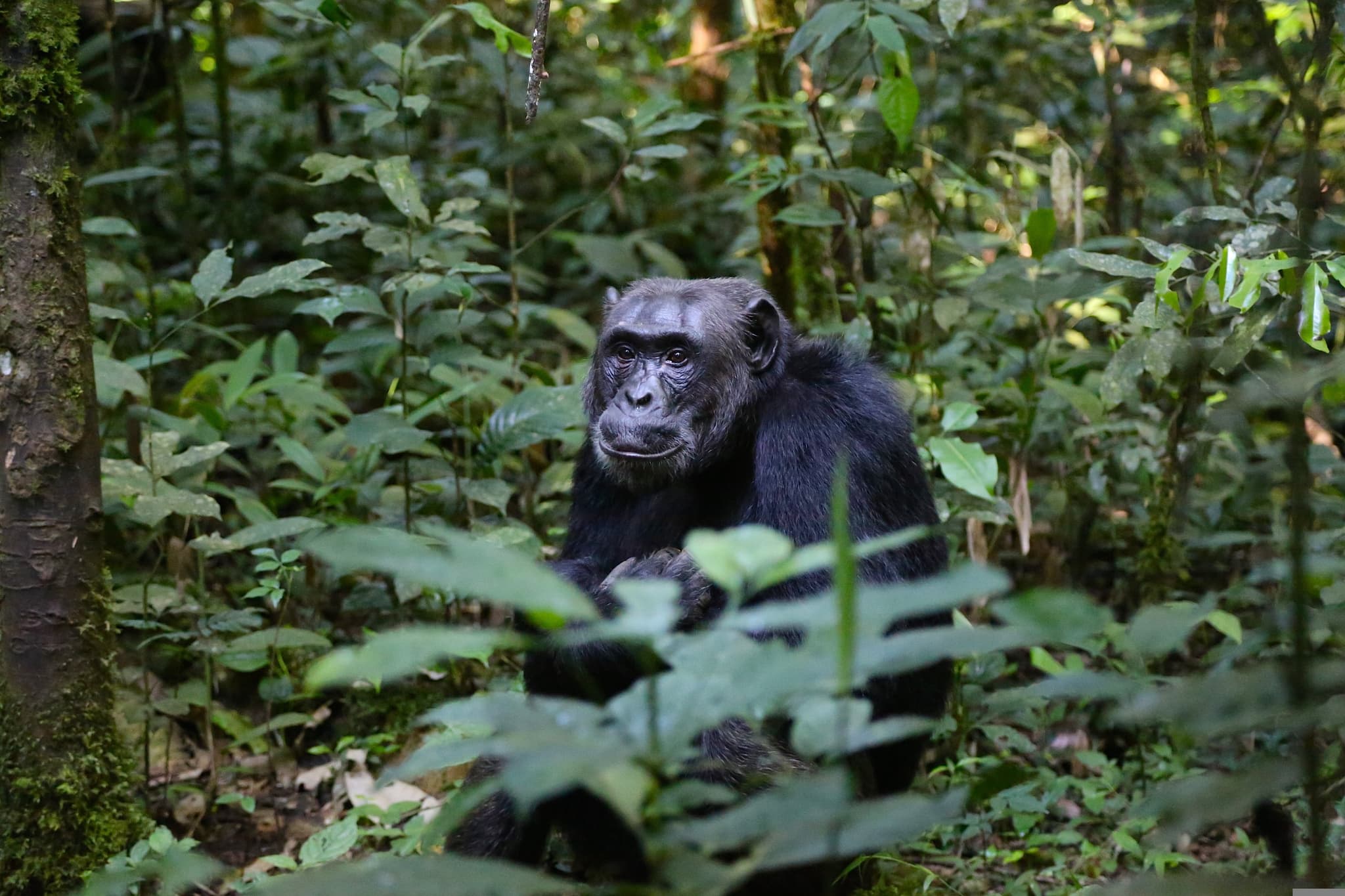
Kibale National Park has the highest density of primates in Africa. A permit-led trek brings you to wild chimps; a longer habituation experience is also offered.
Standard chimpanzee tracking in Kibale National Park is USD 250 per person for foreign non-residents (increased under the UWA tariff), while the Chimpanzee Habituation Experience (CHEX) is USD 300 (or USD 400 for full day).
Discounted rates introduced for low season (April, May, November): Chimpanzee tracking permits to USD 200 (down from USD 250).
The mandatory minimum age limit for both mountain gorilla trekking (Bwindi / Mgahinga) and chimpanzee trekking (Kibale) is 15 years old. Children under 15 are strictly prohibited by the Uganda Wildlife Authority (UWA).
Queen Elizabeth National Park
Classic safari
Elephants, buffalo and hippo-filled channels — the Kazinga Channel boat cruise is a highlight, alongside crater lakes and big-game plains.
Tree-climbing lions, Ishasha
Rare sight
In the remote Ishasha sector of Queen Elizabeth NP, lions famously drape themselves in fig trees — one of only a couple of places on earth you'll reliably see it.
Murchison Falls
The Nile unleashed
Uganda's largest park, where the Nile blasts through a narrow gorge. Boat cruises to the falls, big herds on the northern bank and superb birding.
Jinja & the Source of the Nile
Adventure hub
White-water rafting, kayaking and quad biking where the Nile begins its journey out of Lake Victoria — Uganda's adrenaline capital.
Lake Bunyonyi
Highland calm
A deep, island-dotted crater lake near Bwindi — a tranquil, malaria-light place to unwind after gorilla trekking.
Mgahinga & the Virungas
Volcanoes
Gorillas and rare golden monkeys on the slopes of dramatic volcanic peaks shared with Rwanda and the DRC.
Kidepo Valley NP
Wild frontier
Remote, rugged and rewarding far-northern park with big herds, lions and a true end-of-the-road feel.
Getting around
International flights arrive at Entebbe International Airport, about 40 km from Kampala on the shore of Lake Victoria.
- Most safaris are by road in a 4x4 with a driver-guide — distances look short on a map but roads, traffic and rough tracks make journeys long (Kampala to Bwindi is a full day's drive). A private guided vehicle is the norm and the most comfortable way to travel.
- Light-aircraft transfers (Aerolink and charters) connect Entebbe with airstrips near Bwindi, Kibale, Queen Elizabeth, Murchison Falls and Kidepo — a big time-saver, light aircraft carriers (Aerolink, Eagle Air, Fly Uganda) enforce a strict 15 kg total allowance per person (which must include all hand luggage and camera gear combined), and bags must be 100% soft-sided and completely frameless (no rigid bottom structures or wheels) to fit inside Cessna Caravan fuselage pods. Confirm limits before you pack.
- Self-drive is not recommended for most visitors — driving is on the left, but signage, road conditions, night hazards and police checkpoints make a local driver-guide far safer and easier.
- In Kampala, use ride-hailing apps (Uber, Bolt) rather than hailing on the street; avoid the boda-boda motorcycle taxis, a common cause of injury.
Money & payments
The local currency is the Ugandan Shilling (UGX). The US dollar is widely used in tourism — park permits, lodges and many tours are priced and paid in USD.
- Bring clean, recent USD notes (typically series 2013 or newer, undamaged). Larger denominations (USD 50 and 100) usually get better exchange rates than small notes.
- Cards are accepted at upmarket hotels and lodges, but acceptance is patchy elsewhere and surcharges are common — don't rely on cards alone.
- ATMs are available in Kampala, Entebbe and larger towns; Visa is the most widely accepted card for withdrawals. Withdraw cash before heading to remote parks.
- Carry Ugandan Shillings for tips, markets, fuel, snacks and small purchases in rural areas.
- Tell your bank you'll be travelling so your cards aren't blocked, and keep some cash as backup.
Health before you go
See your GP or a travel clinic 6–8 weeks before you leave — some vaccines and anti-malarials need to be started in advance.
- Yellow fever — a vaccination certificate is mandatory for entry to Uganda for everyone aged one and over, and is checked on arrival. You must be vaccinated at an approved centre at least 10 days before you arrive; carry the official paper certificate (photos and photocopies are not accepted). Keep it with your passport.
- Malaria — Uganda is a high-risk malaria area, present year-round across most of the country, including the safari parks. Take anti-malarial medication as prescribed and prevent bites with repellent, long sleeves at dusk and a treated net. Risk is lower at the highest altitudes (e.g. parts of Bwindi and Mgahinga) but precautions still apply.
- Other vaccines — make sure routine vaccinations are current; travellers commonly add hepatitis A, typhoid and sometimes rabies, cholera or meningitis depending on the itinerary. Ask your doctor.
- Water & food — drink bottled, boiled or filtered water and avoid ice of unknown origin; your lodge will advise.
Insurance: medical facilities are limited outside Kampala and serious cases are often evacuated to Nairobi — comprehensive travel insurance that covers medical evacuation is essential.
Staying safe
Most visits to Uganda's tourist areas and national parks are trouble-free, but it is a destination that needs more care than southern Africa, and the official advice level is elevated.
- Check the advisory first. Australia's Smartraveller advises Australians to exercise a high degree of caution in Uganda overall, with higher warnings (including 'do not travel') for districts near the borders with the Democratic Republic of the Congo (DRC) and South Sudan — armed-group activity, cross-border attacks and a closed DRC border affect the far west and north. Reputable gorilla, chimp and safari areas (Bwindi, Kibale, Queen Elizabeth, Murchison Falls, Kidepo) sit away from these flashpoints, but advice can be raised quickly during security incidents or disease outbreaks. Always read the current Smartraveller page before you book and before you fly.
- In Kampala — keep valuables out of sight, avoid walking after dark, use Uber/Bolt rather than street taxis, and be alert to petty theft in crowds.
- Wildlife — never swim in lakes or rivers (hippos and crocodiles are deadly), and always follow your ranger's instructions on treks and game drives.
- LGBTQ+ travellers should be aware that same-sex relationships are criminalised under harsh local laws — review the Smartraveller advice carefully.
Emergencies: dial 999, or 112 from a mobile. Save your lodge's and operator's numbers, and the Australian contacts below.
Language, people & customs
English and Swahili are Uganda's official languages, and English is the language of business, signage and tourism — so you'll communicate easily almost everywhere. Luganda is the most widely spoken local language around Kampala, and dozens of others are spoken across the country. A few words of greeting are always warmly received.
Ugandans are famously friendly and hospitable, and the pace is relaxed. Dress modestly away from lodges — cover shoulders and knees at religious and rural sites, and smart-casual is fine for nicer restaurants. Always ask before photographing people, and avoid photographing government buildings, military or police. Greetings matter: a handshake and a little small talk go a long way. Note that Uganda has strict, conservative laws on some social matters — read the Smartraveller 'local laws' section before you go.
Staying connected
- Mobile coverage (4G) is good in Kampala, Entebbe and towns, and reaches many park areas, though it drops out in remote forest and valleys.
- Wi-Fi is available at most lodges and hotels, but can be slow or limited to common areas — a welcome chance to switch off in the forest.
- SIMs & eSIMs — local prepaid SIMs (MTN, Airtel) are cheap and give the best data; registration requires your passport. Travel eSIMs are a convenient alternative you can set up before you arrive.
- Power — supply can be intermittent in rural areas, but good lodges run generators or solar. Bring a power bank for long drives and treks.
Emergency & embassy contacts
Australian High Commission, Nairobi (Kenya)
+254 20 427 7100
Accredited to Uganda — the nearest full Australian mission. Limited consular services are also available via the Australian Consulate in Kampala (+256 206 300 966).
Consular emergencies (after hours)
+61 2 6261 3305
DFAT's 24-hour Consular Emergency Centre in Canberra, for Australians needing urgent help overseas.
Uganda emergency services
999 / 112
Dial 999 for police, fire and ambulance, or 112 from a mobile. Save your lodge's and operator's numbers too.
Starter packing list
Gorilla & chimp trekking
- Sturdy, broken-in hiking boots: trails are steep, muddy and slippery
- Gaiters: keep mud, water and ants out of your boots
- Garden / gripping gloves: for grabbing vegetation on steep, thorny climbs
- Waterproof rain jacket: it's a rainforest — rain is possible any month
- Long trousers & long-sleeved shirt: protection from nettles, thorns and insects
- Small daypack & a dry bag: for water, camera and rain protection
- Insect repellent (DEET)
Safari & general
- Neutral, layerable clothing: khaki, olive, beige; warm layer for cool highland mornings
- Wide-brim hat & sunglasses
- Binoculars: superb birding and game viewing
- High-SPF sunscreen
- Soft-sided duffel: required for light-aircraft transfers
Health & documents
- Yellow-fever certificate: mandatory — carry the original with your passport
- Passport: valid 6+ months, 2 blank pages
- Printed e-Visa approval
- Anti-malarials & personal medication
- Travel insurance details: must cover medical evacuation
- Copies of key documents
Practical
- Type G / universal adapter
- Power bank & charging cables
- Clean, recent USD notes: for permits, tips and lodges; large bills get better rates
- Some Ugandan Shillings: for markets, tips and rural buys
- Phone with offline maps & a headtorch
Frequently asked
Do Australians need a visa for Uganda?
Yes. Apply online before travel through Uganda's official immigration portal. If the trip begins in Uganda and stays within Uganda, Rwanda and Kenya, Uganda can issue the East Africa Tourist Visa. If Kenya is first, use Kenya's standard eTA and confirm the separate Uganda/Rwanda requirements because Kenya still marks its regional product ‘coming soon’.
Is the yellow-fever vaccination really compulsory?
Yes. A valid yellow-fever certificate is mandatory for everyone aged one and over and is checked on arrival at Entebbe. You must be vaccinated at an approved centre at least 10 days before you arrive, and carry the original paper certificate — photos and copies are not accepted. Without it you can be denied entry, vaccinated on the spot or quarantined.
How much does a gorilla permit cost?
A Bwindi/Mgahinga gorilla trekking permit for foreign non-residents is around USD 800 per person in high season, with discounted low-season permits (around USD 600) in April, May and November. A longer gorilla habituation experience costs more. Permits are set by the Uganda Wildlife Authority, are limited and sell out — book months ahead, and confirm the current price when you book.
How much is a chimpanzee permit?
A chimpanzee trekking permit in Kibale National Park is around USD 250 per person for foreign non-residents (with lower low-season rates in April, May and November). A longer chimpanzee habituation experience is also available. As with gorilla permits, prices are set by the Uganda Wildlife Authority and should be confirmed at the time of booking.
When is the best time to go?
The two dry seasons — December to February and June to August — are best for gorilla and chimp trekking, when forest trails are firmer and less slippery (June–August is the classic window). The wetter months (March–May and September–November) are greener, quieter and cheaper, with discounted low-season permits, but trails are muddier.
Should I pay in US dollars or Ugandan Shillings?
Both. Permits, lodges and tours are usually priced and paid in clean, recent US dollar notes (large denominations get better rates). Carry Ugandan Shillings for tips, markets, fuel and small purchases. Cards work at upmarket hotels but acceptance is patchy elsewhere, so don't rely on them alone.
Is Uganda safe to visit?
Tourist areas and the main national parks are generally trouble-free with sensible precautions, but Smartraveller advises Australians to exercise a high degree of caution overall, with higher 'do not travel' warnings for districts near the DRC and South Sudan borders. Advice can change quickly — read the current Smartraveller page and travel with a reputable operator.
How fit do I need to be for gorilla trekking?
Reasonably fit. Treks range from one to many hours through steep, dense, often muddy rainforest at altitude. Good boots, gaiters, gloves and a rain jacket help, and hiring a porter (a small fee plus tip) makes the climb much easier — and supports the local community. Let us know your fitness so we can match you to an easier gorilla family where possible.
Sources & last verified
Last verified: 16 July 2026. Confirm visa, health and permit rules immediately before travel.
Key sources:
- Uganda Immigration, East African Tourist Visa — immigration.go.ug
- Kenya eTA eligibility — etakenya.go.ke
- Smartraveller, Uganda — smartraveller.gov.au