practicalities· 17 min read· Explore Africa editorial · Published June 2026 · Updated 4 Nov 2026
Self-driving in Southern Africa
Licences, vehicle selection, road conditions, fuel planning, park rules and cross-border paperwork for Australians driving in South Africa, Namibia and Botswana, with additional requirements for Zambia and Zimbabwe.
This guide covers short-visit driving in South Africa, Namibia and Botswana, with a separate checklist for Zambia and Zimbabwe extensions. It distinguishes national entry and licence requirements from rental-company conditions and park rules. Requirements and fees are recorded as at November 2026; check the linked authorities and the actual rental agreement before booking and again before travel.
Licences: check each country separately
As at November 2026, Smartraveller gives the following advice for Australian drivers. Carry your physical Australian licence, not just a digital version, and check the hire company's licence, age and driving-experience requirements before booking.
| Country | Documents and conditions in Australian Government advice |
|---|---|
| South Africa | Valid Australian driver's licence; driver must be at least 18. |
| Namibia | Valid Australian driver's licence. An IDP is not mandatory according to Smartraveller, but may be requested. |
| Botswana | Australian licence and International Driving Permit (IDP). |
| Zambia | Australian licence and IDP. |
| Zimbabwe | Australian licence and IDP. |
An IDP is a translation, not a substitute for your licence. The Australian Automobile Association and its member clubs are the authorised Australian distributors. It is a physical booklet, normally valid for 12 months from issue or until the Australian licence expires, whichever comes first. Carry both documents.
Arrange the IDP before departure. Sources differ on whether it must be obtained before leaving Australia: the destination advice says to do so, while the AAA explicitly allows online applications with overseas delivery. If already abroad, check eligibility and delivery with the AAA and confirm acceptance with the destination authority or embassy before driving.
Choose a vehicle for the actual route
Do not choose solely by country name. Check the surface, current condition and permission to use every access road, including the final approach to accommodation.
| Route type | Evidence and booking implication |
|---|---|
| South African road touring | Smartraveller describes roads as generally good but variable, particularly in rural areas. Obtain route-specific vehicle advice rather than assuming every road is suitable for a sedan. South Africa advice. |
| Kruger tourist roads | SANParks describes a network of tarred and good gravel tourist roads. Special trails and no-entry roads are not part of that general access. Road network, park rules. |
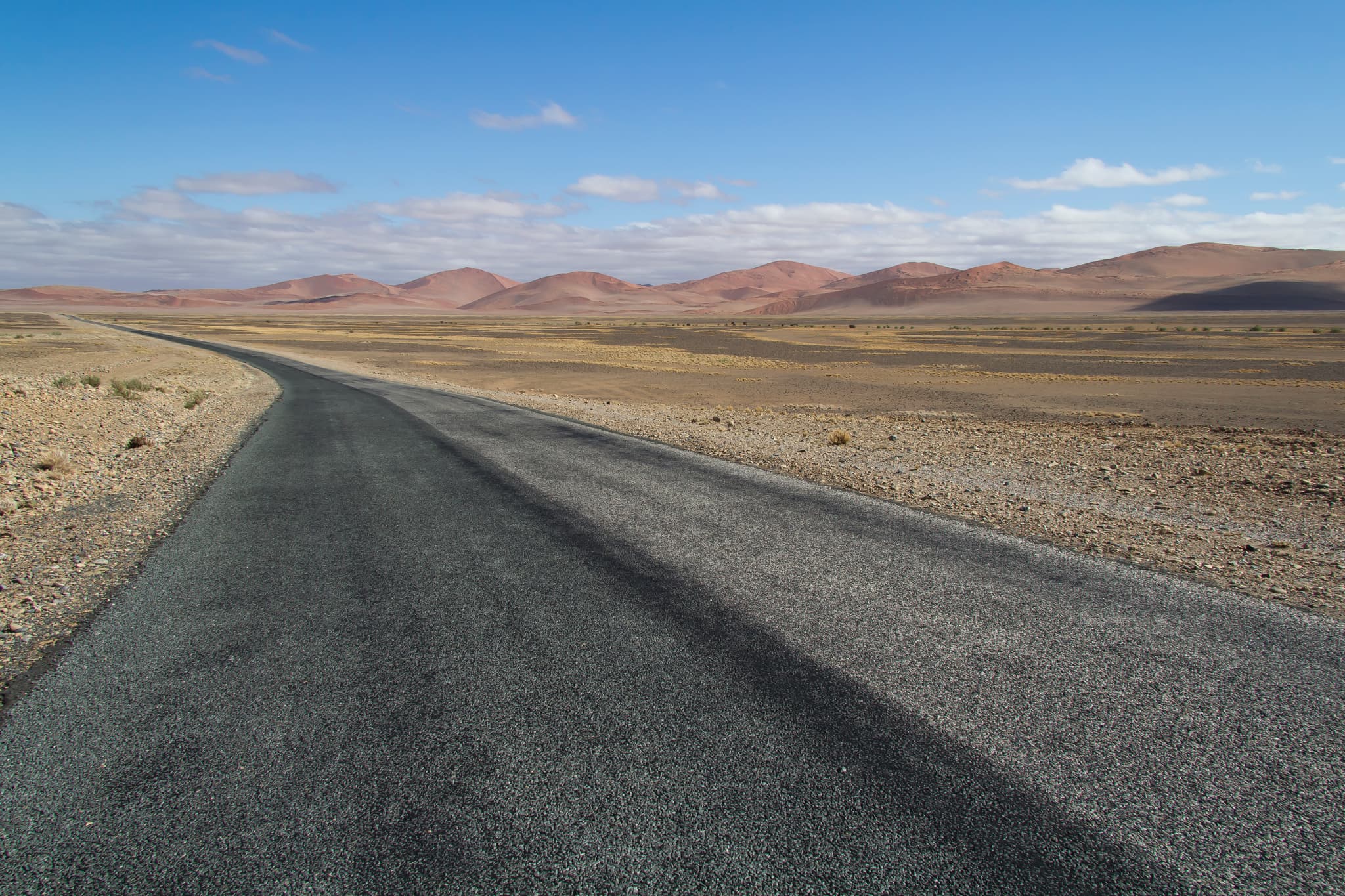
| Namibia paved and gravel routes | Namibia Tourism Board says major attractions can be reached on paved or gravel roads in a 2WD. It identifies greater clearance and more suitable tyres as advantages of 4WD vehicles. This does not establish access to every sand track or lodge. Self-drive planning guide, vehicle selection. |
| Remote Botswana camping and safari tracks | Botswana Tourism Organisation describes rough terrain and heavy sand, with remote camping areas accessible only by 4WD. It calls for spare wheels, recovery equipment, water, food and fuel. Camping, safari preparation. |
For remote Botswana desert areas, Smartraveller advises using a reputable guide and a 4WD with emergency provisions. Do not treat hiring a 4WD as a substitute for suitable experience or guidance.
Road rules and speed planning
Drive on the left in South Africa, Namibia and Botswana. As at November 2026, the following published limits and recommendations are useful planning references. Follow signs and check local rules before travel.
| Location | Published limit or recommendation |
|---|---|
| South Africa, ordinary passenger cars | General limits: 60 km/h in urban areas; 100 km/h outside urban areas on roads that are not freeways; 120 km/h on freeways. South African Government. |
| Namibia, gravel roads | Tourism Board recommendation: do not exceed 80 km/h. This is advice, not a statement of the statutory limit or a safe speed for every surface. Allow additional driving time. Namibia Tourism Board. |
| Botswana | Tourism Organisation lists 120 km/h on tarred roads, 60 km/h in towns and villages, and 40 km/h in national parks. Stay on established tracks. Botswana Tourism Organisation. |
| Kruger National Park | 50 km/h on tar, 40 km/h on gravel and 20 km/h in rest camps. SANParks recommends an average of 30 km/h on tourist roads for safety and game viewing. SANParks. |
Do not plan driving time by dividing the distance by the maximum speed limit. Allow for stops and slower surfaces. The South African Government guidance advises drivers to observe speed limits and not drink and drive.
Namibia: gravel, flooding and vehicle preparation
Smartraveller identifies gravel and sandy roads, flash floods and water-damaged roads as hazards. It reports tourist accidents caused by excessive speed on unfamiliar roads and specifically advises checking insurance for unsealed-road and single-vehicle accidents.
Before a remote leg, review the route and current conditions, and carry sufficient fuel, water and emergency provisions. The Tourism Board's packing guidance lists a spare wheel, preferably two, an air compressor or pump, tyre gauge, battery leads, towrope, shovel and basic toolkit. Use this as a discussion checklist with the rental company, not confirmation that these items are included.
Ask for vehicle-specific instructions on tyres and equipment. This guide does not prescribe one tyre-pressure reduction or water-crossing depth for all vehicles.
Fuel, supplies and communications
Prepare a leg-by-leg supply plan rather than relying on a fixed distance between fuel stations or a half-tank rule.
- For Namibia's desert areas, Smartraveller advises sufficient fuel, water and emergency provisions.
- For remote Botswana camping, Botswana Tourism Organisation warns that water, fuel and food may be unavailable. Its safari guidance also warns that many wilderness areas lack mobile reception. Agree a communications and recovery plan before entering them.
- In Zimbabwe, Smartraveller warns of fuel shortages, advises keeping the tank topped up and carrying sufficient fuel for long journeys, and says to check whether international payment cards are accepted.
For each leg, record the planned refuelling points, the vehicle's usable range, alternatives if fuel is unavailable, food and water needs, payment arrangements and the expected arrival time. Confirm spare-fuel storage and carrying arrangements with the vehicle supplier. There is no verified region-wide claim here that fuel stations are cash-only.
Kruger: wildlife and gate discipline
As at November 2026, SANParks' Kruger rules require visitors to:
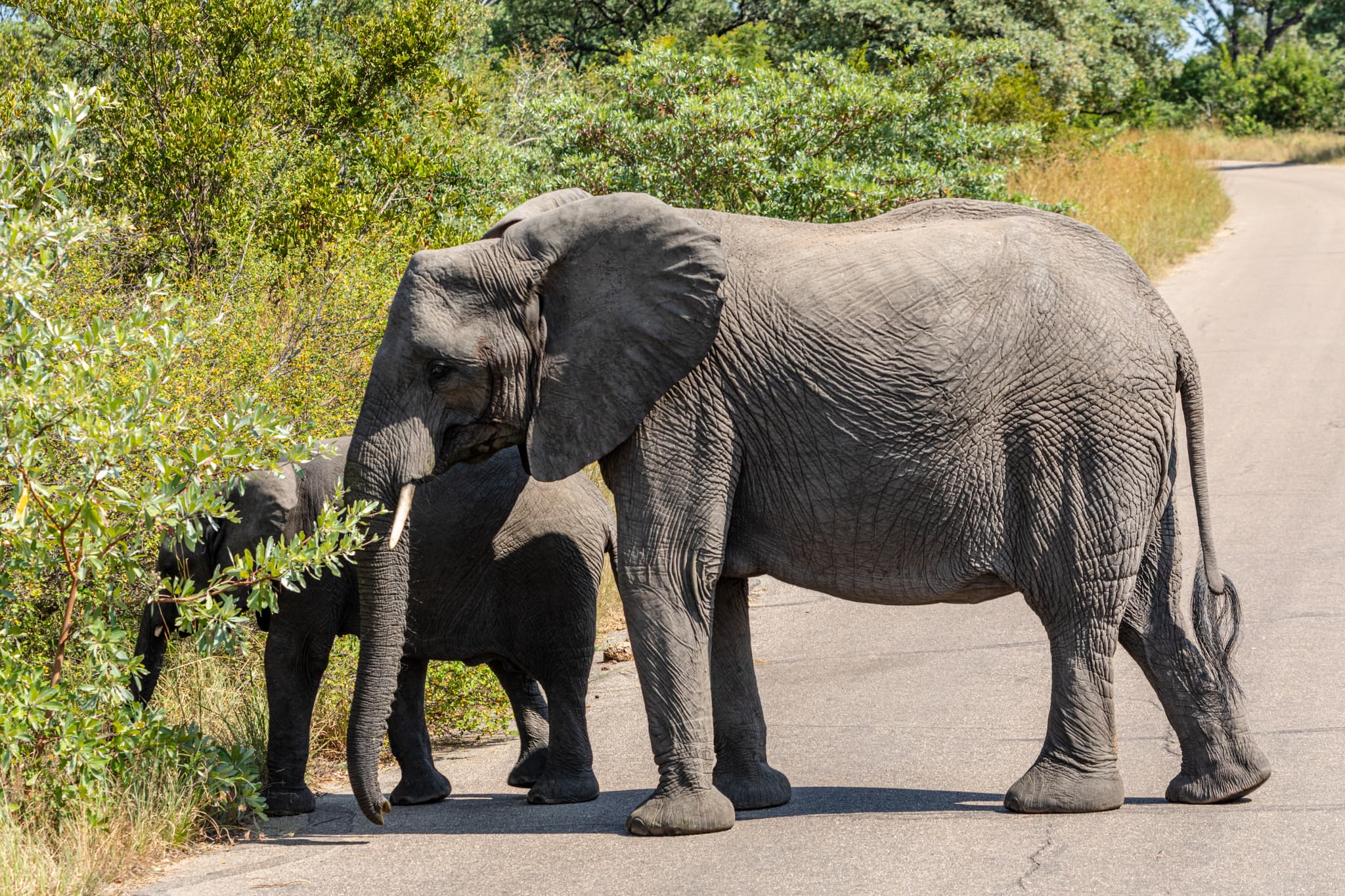
- Remain in the vehicle except in designated areas. Keep doors closed and do not put any part of the body out of a window or sunroof.
- Stay on permitted roads. Do not drive off-road or past a no-entry sign.
- Avoid feeding or disturbing animals.
- Be inside the camp or outside the park gate by the times on the entry permit. Driving before or after those times is prohibited.
- Stay overnight only at a booked, recognised facility.
Recheck park rules and access before travel. For Botswana, the Tourism Organisation likewise says to keep to established park tracks and warns that campsites are usually unfenced. Follow wildlife officers' instructions rather than treating a campsite as a secure walking area.
Cross-border hire: permission is not automatic
Check the exact rental product, collection country, destination countries and return location before booking. As at November 2026, the Avis South Africa standard-car terms require a letter of authority for Botswana and Namibia, prohibit South Africa rentals entering Zambia, and prohibit entry to Zimbabwe and Mozambique. These are named operator conditions, not national bans or conditions for every 4WD supplier. Check your operator.
Use the following pre-booking questions:
- Is the exact vehicle authorised for every country, road and park on the itinerary?
- Which letter of authority, registration papers, ownership or police-clearance documents and country identifier must accompany it?
- Are the rental cross-border charge, one-way return fee and government vehicle-entry charges separate?
- Does third-party cover apply in each country, and does the damage waiver change across the border?
- Who pays for towing, recovery, replacement tyres or a replacement vehicle, and from which locations?
Avis Budget's published charges guide illustrates these separate charges and says safari-rental conditions differ from standard car hire. Its old monetary examples are not a current quote. Obtain the current agreement and written permission before travel.
Vehicle-entry charges: Namibia example
As at November 2026, Namibia's Road Fund Administration requires foreign-registered vehicles to pay Cross-Border Charges and obtain a permit. The public procedure page directs owners and operators to the RFA border office and links the current fee schedule. Check the current RFA fees and tariffs for the vehicle classification and amount before travel.
The RFA says to obtain permits at its border offices, keep them in the vehicle and hand them in at the RFA office on exit. It permits one-time payment at border posts but the opened guidance does not specify every post's card facilities. Confirm payment arrangements rather than assuming cash-only or universal card acceptance. RFA procedures.
This is a Namibia vehicle-entry requirement, not a complete multi-country border budget. Confirm the requirements for each other border and keep immigration, customs and vehicle paperwork separate.
Passenger entry: Australian ordinary passports
Vehicle permission does not replace immigration permission. As at November 2026, the Australian Government advice is:
| Country | Tourist entry position |
|---|---|
| South Africa | No visa for visits up to 90 days. Leaving and re-entering does not automatically grant another 90 days. |
| Namibia | Visa required; online application before travel or visa on arrival. Fees apply. Confirm availability at the intended land entry point. |
| Botswana | No visa for tourist visits up to 90 days. |
| Zambia | No visa for Australian passport holders; tourists may enter for 90 days in any 12-month period from first entry. |
| Zimbabwe | Visa required; a 30-day tourist visa is available on arrival for a fee. |
Check each linked authority before travel for passport validity, blank pages, child-travel documents, health certificates and the intended entry point. Dual Australian-South African citizens must enter and leave South Africa on their South African passport. Do not substitute a general six-month passport rule for the actual requirements.
For Victoria Falls combinations, Zambia Immigration lists Australians as eligible for the USD50 KAZA Univisa, valid up to 30 days within Zambia and Zimbabwe and covering Botswana day trips through Kazungula. Do not assume it remains valid after an overnight stay in Botswana. Entry-point lists differ between Zambia Immigration and Smartraveller's Zimbabwe advice; confirm with the issuing authority or embassy before travel, especially for any entry point other than those explicitly listed by Zambia Immigration.
Zambia and Zimbabwe: additional vehicle checks
As at November 2026, Smartraveller's Zambia advice says drivers must carry identity documents and vehicles must carry two metallic emergency triangles with white reflective stickers on the front and red reflective stickers on the back. It warns of common police roadblocks, poor lighting and unreliable emergency services.
For Zimbabwe, the listed equipment is a fire extinguisher, two metallic emergency triangles with the same reflective markings, a spare wheel, wheel spanner and jack. Police may inspect identity, registration and ownership documents and vehicle equipment. Smartraveller also identifies vehicle police clearance as necessary when leaving via a land border. Verify current requirements before travel.
Zimbabwe's roads may have potholes, unmarked speed humps and non-functioning traffic lights. Follow lawful roadblock instructions. Do not assume fines are never payable on the spot: Smartraveller says police in Zimbabwe may request on-the-spot fines or bribes and warns that paying a bribe can lead to further demands.
Rental waivers, exclusions and travel insurance
Review the actual agreement, not just a label such as 'super cover'. Avis Budget's published guide, used here only as an operator example, distinguishes standard and reduced-liability collision waivers, separate windscreen and tyre cover, and exclusions for undercarriage or water damage unless included in the rate. It also identifies unsuitable-road, unauthorised-driver and single-vehicle accident liabilities. Check current terms with your operator.
Before accepting the vehicle, establish in writing:
- The deposit and excess, including any different treatment of rollovers or single-vehicle accidents.
- Whether tyres, glass, underbody, water damage and equipment are covered.
- Authorised drivers, permitted roads and restrictions on off-road use.
- Country-by-country cover, recovery arrangements and replacement-vehicle costs.
Smartraveller's Namibia advice specifically recommends checking unsealed-road and single-vehicle cover. Separately, obtain travel insurance covering your planned activities and overseas medical costs, including medical evacuation; the Australian Government will not pay those costs. Smartraveller.
South Africa: route security and tolls
Smartraveller warns that GPS diversions have taken travellers through unsafe areas. Check proposed alternative routes against reliable local advice; do not assume the shortest route is suitable. Keep doors locked, windows up and valuables out of sight. Do not attempt to cross protest roadblocks.
Gauteng's e-toll charging ended from 12 April 2024. This is not the abolition of every toll plaza in South Africa. The Transport Minister's statement distinguishes the cancelled e-toll network from continuing toll-plaza account use. Check route tolls and rental billing arrangements before travel; older rental PDFs still describe the discontinued scheme.
Before accepting the vehicle and leaving town
Documents and contract
- Physical licence and IDP where required: Check the country table and AAA guidance above.
- Passport, entry permission and vehicle papers: Check each border, including re-entry and any required police clearance.
- All drivers and destinations authorised: Read the contract, damage exclusions and cross-border letter together.
Vehicle and route preparation
- Inspect and record the vehicle's condition: Practical handover precaution: photograph existing damage and have discrepancies recorded before accepting the vehicle.
- Check spares and required safety equipment: Use the Namibia Tourism Board packing list and the Zambia or Zimbabwe requirements above; confirm equipment is usable with this vehicle.
- Request an equipment demonstration: Ask the supplier to explain the jack, tyre equipment, fuel system and 4WD controls fitted to the actual vehicle.
- Confirm supplies, communications and arrival plan: Use the fuel and communications section above. Carry route information offline as a planning precaution where mobile reception is absent.
Breakdowns and emergency contacts
Save the rental emergency line, insurer assistance number and accommodation contacts before departure. For remote Botswana, do not rely on a mobile phone alone: the Tourism Organisation identifies reception gaps. Arrange a suitable alternative communications and recovery plan with the supplier.
For South Africa, the Western Cape Government lists 112 for mobile emergencies on MTN, Vodacom, Cell C and Telkom, and 10111 for police. For Botswana, Smartraveller lists 997 for medical emergencies, 998 for fire and rescue, and 999 for police. Recheck these contacts before travel.
Give responders your precise location or landmarks, incident details, a callback number and information about injuries. Before travel, also save the local emergency contacts in the advice for Namibia, Zambia or Zimbabwe, as applicable. Roadside assistance and medical evacuation are separate arrangements; verify both.
Sources
Last verified: 4 November 2026. Check current border, licence, road and park requirements before travel. Rental examples illustrate issues to check, not a quote or guarantee of cover.
- Smartraveller: South Africa, Namibia, Botswana, Zambia, Zimbabwe.
- Australian Automobile Association: International Driving Permits.
- Namibia Tourism Board: transportation and self-drive planning PDF.
- Botswana Tourism Organisation: self-drive camping and safari preparation.
- SANParks: Kruger rules and road network.
- Namibia RFA: fees and tariffs and cross-border procedures.
- Zambia Immigration: KAZA Univisa.
- Avis South Africa: standard-car terms and charges and waivers PDF.
- South African Government: road-safety guidance and Western Cape emergency contacts.
- South African Government: Gauteng e-toll cancellation.
Images: Luke Price, Namibia road, CC BY 2.0, licence; Dietmar Rabich, Kruger elephants, CC BY-SA 4.0, licence.