practicalities· 10 min read· Explore Africa editorial · Published November 2026 · Updated 4 Nov 2026
What to pack for Africa
Packing checklists for Australian travellers combining safaris, cities and beaches in southern and East Africa, with named airline baggage limits, sun and insect protection, medical supplies and document checks.
This guide covers luggage, clothing, health supplies and documents for safaris, city stays and beach visits in southern and East Africa. It uses named airline examples rather than a single Africa-wide baggage rule. Adapt the checklists to the route, activities and weather, as recommended by Smartraveller; mountaineering, expedition camping and specialist diving equipment are outside its scope.
Choose the bag before choosing the contents
As at November 2026, total allowances in these operator examples are 15 to 20 kg, but the limit belongs to the operator and route, not the destination country. Check your operator before travel, including dimensions, permitted bag construction and how cameras and hand luggage are counted.
| Operator and service | Published allowance | Bag requirement |
|---|---|---|
| Safarilink, services other than the listed exceptions | 15 kg per person including hand baggage and cameras | Soft bags; terms specify 60 × 45 × 30 cm |
| Safarilink, Zanzibar, Kisumu, Diani, Lamu, Malindi, Entebbe and Mombasa | 20 kg per person including hand baggage and cameras | Soft bags; check the booked service |
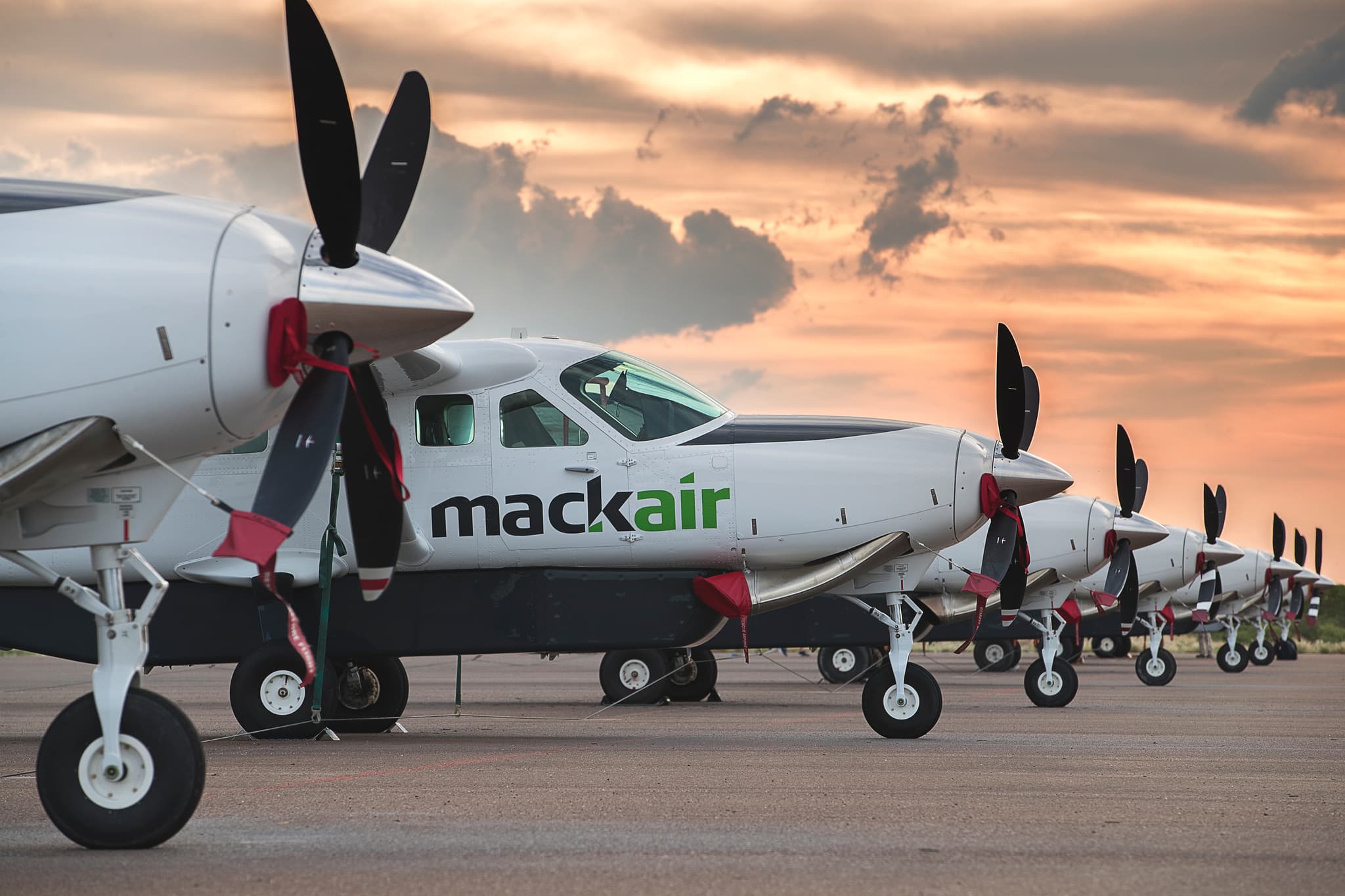
| Mack Air, Botswana and Zimbabwe terms | 20 kg total, including one carry-on item of up to 5 kg | Soft-sided bags only, without wheels, frames or rigid sides |
Sources: Safarilink baggage, Safarilink terms, Mack Air terms. Safarilink says excess baggage depends on available payload or space and the captain's discretion. Do not treat payment for excess as an unconditional guarantee of carriage.
Weigh the complete packed allowance, including the camera bag. Before reducing clothing quantities, check each property's laundry availability, charges and turnaround; this guide does not assume daily laundry.
Safari clothing and equipment
Clothing
- Long-sleeved shirts, long trousers and closed shoes: For bite protection, minimise exposed skin. CDC Yellow Book.
- Neutral-coloured, medium-weight clothing where tsetse flies occur: Tsetse flies are attracted to bright and dark colours, particularly blue and black, and can bite through lightweight fabric. This is a bite-prevention recommendation, not a claim that bright clothes frighten wildlife. CDC.
- Warm layer and comfortable walking shoes: SANParks specifically recommends warm winter clothing and walking shoes for Mountain Zebra National Park. Choose layers for the actual stops and forecast, rather than applying one season to all of Africa. SANParks.
- Broad-brim hat, sunglasses and sun-protective clothing: Use these alongside sunscreen and shade, not as alternatives to one another. Cancer Council.
Equipment
- Binoculars, camera and wildlife reference material: Included in SANParks' visitor packing advice. Count equipment within your operator's allowance. SANParks.
- Torch or head torch: Mountain Zebra National Park notes limited outdoor lighting in camps. Follow the camp's instructions about movement after dark. SANParks.
- Water for planned walks: SANParks requires hikers on its Mountain Zebra nature and overnight trails to carry sufficient water. Confirm drinking-water arrangements for your own route. SANParks.
City and beach additions
Use the following as a planning checklist, not a compulsory outfit count. Smartraveller recommends packing for the weather and activities and checking cultural clothing expectations, especially at religious sites.
| Trip component | Items to consider | Check before packing |
|---|---|---|
| City walking | Everyday clothing, walking shoes, a day bag and a warm or rain layer suited to the forecast | Weather for each stop and any venue dress requirements |
| Beach or pool | Swimwear, sun-protective clothing, hat, sunglasses and water-resistant sunscreen | What the property supplies, including towels |
| Snorkelling | Your own mask and snorkel if preferred, plus sun-protective swim clothing | Equipment supplied by the operator and any airline restrictions on sports equipment |
| Town visits from a beach resort | Clothing suitable away from the beach | Local dress expectations, not just resort practice |
For Tanzania, especially Zanzibar, Smartraveller describes conservative dress standards and advises women not to wear shorts or sleeveless tops outside resorts, as at November 2026. Pack suitable coverage for town visits and check the current destination advice before travel.
Sun protection: quantity and application
As at November 2026, Cancer Council Australia recommends SPF 50 or SPF 50+, broad-spectrum, water-resistant sunscreen, used with covering clothing, a broad-brim hat, shade and sunglasses meeting Australian Standards. Check its current advice and the product instructions before travel.
- Apply sunscreen 20 minutes before going outdoors.
- For an adult full-body application, the recommended amount is about 35 mL, or seven teaspoons. This is not the amount needed for just the face.
- Reapply at least every two hours outdoors and after swimming, sweating or towel drying, even when the label says water-resistant.
- Plan the supply around exposed skin and repeated applications. A small cabin-size bottle should not be treated as a whole-trip supply.
This guide does not recommend a product on an unverified claim that it is 'reef-safe'. Check any destination-specific product rules separately.
Insect protection is not just for dusk
As at November 2026, Smartraveller recommends repellents containing DEET or picaridin, long sleeves and trousers, and bed nets where mosquitoes cannot be excluded from the room. Check current health advice for the itinerary before travel and follow the repellent label, including age restrictions.
The CDC Yellow Book notes that mosquitoes bite during both day and night. Use bite protection whenever exposed in risk areas, rather than waiting until dusk. Use separate sunscreen and repellent products, applying sunscreen first.
Permethrin is for treating suitable clothing or equipment according to its label, never for applying directly to skin. Repellent and permethrin-treated clothing have not been proven effective against tsetse flies; use the medium-weight, neutral-coloured clothing guidance above. Ask a doctor about malaria prevention for the exact route; repellent is not a substitute for prescribed antimalarial medicine.
Prepare the medical kit before departure
As at November 2026, Healthdirect recommends seeing a doctor preferably at least eight weeks before overseas travel. Bring the itinerary to discuss vaccinations, malaria prevention, existing conditions and access to care. Check current advice before travel.
| Kit component | What to prepare |
|---|---|
| Regular medicines | Enough for the trip and an agreed contingency supply, within destination quantity limits; original pharmacy packaging, prescription copies and a doctor's letter |
| Basic first aid | Adhesive dressings, gauze or dressing pads, bandages, antiseptic, disposable gloves and a first aid booklet |
| Symptom medicines | Ask a pharmacist which pain relief, antihistamine, motion-sickness or diarrhoea medicines suit you; obtain written instructions |
| Rehydration | Discuss oral rehydration products and how to use them |
| Personal health supplies | Required menstrual products, contraception and other regularly used supplies |
Sources: Smartraveller medicines, Healthdirect travel health, Healthdirect first aid kits, Queensland Health travel-health guideline, Medical Kits, pages 16 to 17.
Check medicine legality for every destination before packing. Ask the pharmacist how to transport temperature-sensitive medicines and how to divide supplies safely: Smartraveller advises keeping a quantity in a separate bag rather than risking loss of the entire supply. Check airline restrictions on medical equipment and sharps. This is a packing checklist, not a prescribing or treatment guide.
Cabin liquids and toiletries
As at November 2026, Australian international-flight screening rules require ordinary liquids, aerosols and gels in cabin baggage to be in containers of no more than 100 mL or 100 g each. They must fit into one transparent resealable bag whose four sealed sides total no more than 80 cm, for example 20 × 20 cm. A partly filled larger container does not qualify.
Pack larger ordinary toiletries in checked baggage, subject to dangerous-goods rules. Medicines and medical items required during the flight have exemptions, but must be presented with supporting proof such as a doctor's letter. Carer and baby-product exceptions also exist.
Check Home Affairs screening rules, your airline and transit-airport requirements before travel. The Australian rule is not a guarantee of acceptance at every overseas checkpoint.
Batteries, charging and adaptors
As at November 2026, CASA requires spare lithium batteries and power banks to travel in the cabin, never in checked baggage. Protect terminals against short circuits, for example with original packaging, insulating tape or individual protective cases.
Read the watt-hour rating and check the airline's current quantity, capacity and in-flight charging rules before travel. Do not use or charge a battery that is swollen, damaged or overheating. Devices permitted in checked baggage must be fully switched off, not in sleep mode, and protected from damage or accidental activation.
Pack the chargers and cables needed for your own devices. Check the socket and charging arrangements for each accommodation stop rather than relying on the word 'universal' on an adaptor. South African Tourism gives South Africa's supply as 220/230 V AC, 50 Hz, with round-pin plugs. This does not establish socket compatibility throughout southern or East Africa.
Documents and backups
As at November 2026, use Smartraveller's essentials checklist and the relevant destination authorities to check the following before travel. Its general recommendation of six months' passport validity beyond the trip is a planning check, not a statement of every country's legal minimum.
- Passport, with validity and blank-page requirements checked for every destination and transit.
- Visas or entry authorisations required for the route.
- Printed flight and accommodation confirmations and a copy of the itinerary.
- Travel insurance policy and emergency assistance contacts; check cover for the actual activities and medical evacuation.
- Prescription copies, doctor's letter and any required vaccination certificate.
- Any additional child-travel documents; driving licence and International Driving Permit if required.
- Copies of key documents to carry separately, with another set left with a trusted person. Keep a hard-copy emergency contact list.
- More than one payment option, with card usability and currency limits checked.
Yellow fever certificate requirements depend on the destination and previous travel or transit. Smartraveller's infectious-disease advice warns that an airline may refuse boarding without a required certificate. Check the whole route with the relevant authority and discuss vaccination with a clinician. For evacuation cover, see the practical warning in Smartraveller's Tanzania advice.
Final packing check
Before closing the bag, work through the Smartraveller checklist and the operator-specific sources above:
- Recheck every flight's allowance, bag dimensions and dangerous-goods restrictions.
- Weigh all bags together where the operator uses a combined allowance.
- Keep documents and flight-required medicines accessible; apply the separate-supply plan agreed with the pharmacist.
- Put power banks and spare lithium batteries in cabin baggage with terminals protected.
- Check clothing against each stop's forecast, activities and local dress expectations.
- Confirm laundry, drinking water, charging and supplied activity equipment rather than assuming they are included.
- Remove non-essential duplicates until the packed bag complies.
Sources
Last verified: 4 November 2026. Check current airline conditions, destination requirements and health advice before travel.
- Smartraveller: essentials checklist
- Safarilink: baggage allowance and terms
- Mack Air: terms and luggage guidelines
- SANParks: Mountain Zebra visitor tips
- Cancer Council Australia: preventing skin cancer
- CDC Yellow Book: mosquitoes, ticks and other arthropods
- Healthdirect: travel health
- CASA: lithium batteries
- Home Affairs: cabin liquids
- Smartraveller: Tanzania
Image source pages and licences: Selous safari vehicle, CC BY-SA 3.0; Mack Air aircraft in Maun, CC BY-SA 4.0.